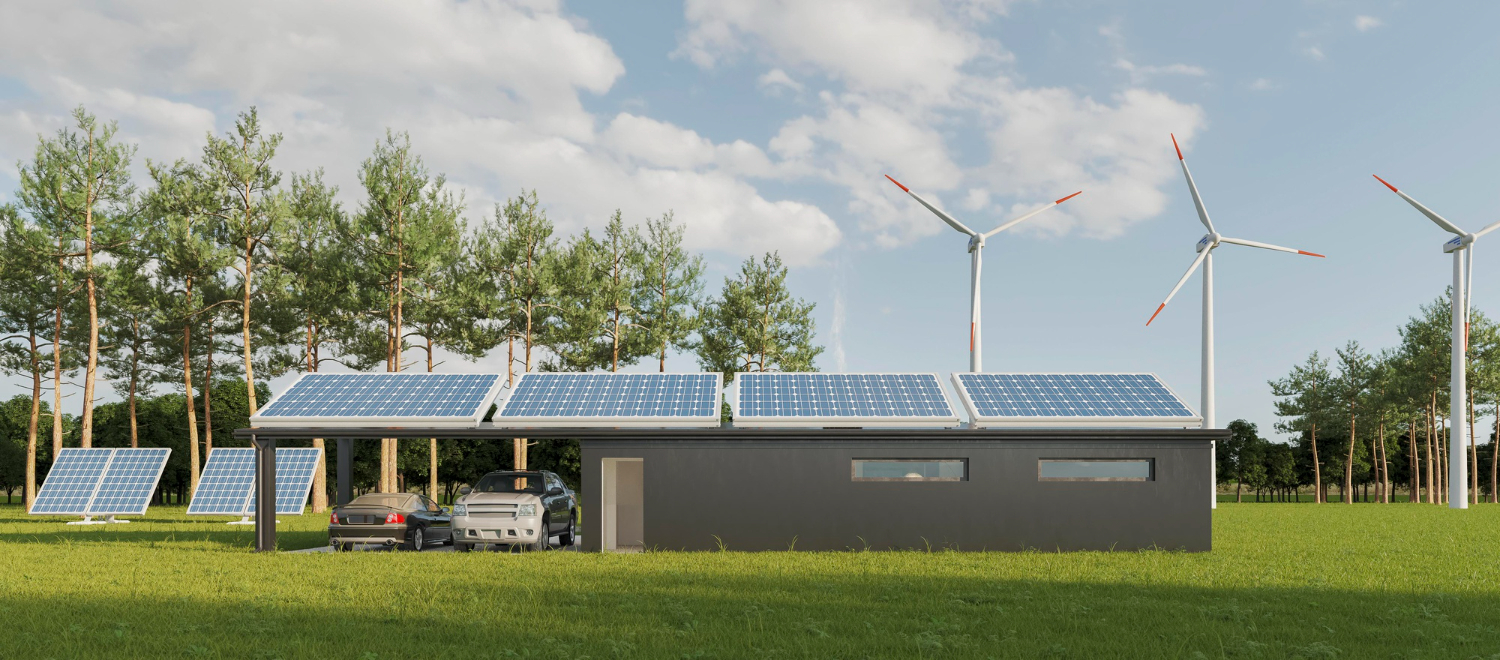
The Three-Way Energy Revolution at Your Home
Something significant is happening in Sri Lankan driveways. Electric vehicles, once a curiosity you’d spot occasionally on the Colombo expressway, are becoming a genuine mainstream conversation. Import policy shifts, rising petrol costs, and improving EV availability from brands like BYD, MG, and DFSK have brought EVs within reach of a growing segment of Sri Lankan buyers.
At the same time, solar adoption is accelerating. And battery storage is becoming more affordable by the year.
Put these three together, solar panels, a home battery, and EV charging, and you’ve got something genuinely powerful: a home energy ecosystem that generates its own fuel, stores it, and uses it to run both your house and your car. The monthly running cost of your vehicle drops to near-zero. Your electricity bill shrinks dramatically. And you’re largely insulated from both grid outages and petrol price spikes.
This isn’t a distant future scenario. Sri Lankan households are setting this up right now. Here’s what you need to know.
The EV Landscape in Sri Lanka: 2026 Update
Sri Lanka’s EV market has been through a turbulent few years with import restrictions, but the landscape in 2026 is considerably clearer. The government has maintained concessionary import duty structures for EVs as part of its renewable energy and import substitution strategy, and charging infrastructure, though still developing, has expanded significantly along major highways and in Colombo’s commercial districts.
For homeowners, the most relevant development is the growing availability of reliable, locally supported EVs in the Rs. 5–12 million range, making the economics of solar-powered EV ownership more accessible than ever.
A typical EV in the Sri Lankan market, say, a compact sedan with a 40–60 kWh battery, needs roughly 12–18 kWh per 100 km of driving. For the average Sri Lankan driving 30–40 km per day, that’s approximately 5–7 kWh of daily charging needs.
To put that in context: a 6 kW solar system on a sunny day in Colombo generates approximately 24–28 kWh. Your car’s daily charging need is just 20–25% of that. The numbers work exceptionally well.
Understanding EV Charging Levels and What They Mean for Solar Integration
Not all EV chargers are equal, and the type you install matters a lot for how effectively you can integrate solar charging.
- Level 1 — Standard 3-pin socket (2.2–2.4 kW)
Every EV can charge from a regular wall socket. At 2.2 kW, you’ll add about 15 km of range per hour. This is slow, but perfectly adequate for overnight top-ups if you drive modest distances. The solar integration challenge here is that if you’re charging at 11 PM, you’re drawing from the grid or battery, not directly from solar.
- Level 2 — AC Wall Box Charger (7 kW – 22 kW)
This is where solar integration gets exciting. A 7 kW wall box charger can be programmed to operate only when solar generation is above a set threshold, effectively letting you charge your EV for free using surplus solar that would otherwise be exported to the grid at net metering rates (which are often lower than what you’d pay to import the same energy at night). Most modern hybrid inverters can control EV charger activation based on real-time solar output.
- Level 3 — DC Fast Charger (50 kW+)
These are commercial/highway chargers, not relevant for residential installations. The power requirements far exceed what home solar systems can typically support.
For Sri Lankan homes, a 7 kW AC wall box charger is the sweet spot, fast enough to fully charge most EVs in 6–8 hours, slow enough to be powered directly by solar generation, and compatible with standard single-phase home connections.
Designing a Solar + Battery + EV System for Sri Lanka
The key design question is, ‘What size system do you need to comfortably cover your household loads AND your EV charging?’
Let’s walk through a realistic example. A family in a mid-size Colombo home has the following energy profile:
- Household consumption: 800 kWh/month (approx. 26 kWh/day)
- EV daily charging need: 6 kWh/day
- Total daily energy need: approximately 32 kWh
To cover this almost entirely from solar, accounting for system losses and cloudy days, you’d want a solar array of around 12–15 kW paired with a battery bank of 15–20 kWh.
That might sound large, but consider the alternative: you’re currently spending on petrol AND electricity separately. The solar system replaces both. The total monthly cost reduction, electricity savings plus fuel savings, often makes the system financially viable within 5–7 years, depending on your specific consumption and current fuel spend.
Smart EV Charging: Making Solar and EVs Work Together
The real value of solar + EV integration comes from smart charging, the ability to coordinate when your car charges based on real-time solar generation and battery status.
Here’s how a well-configured smart system behaves on a typical sunny Sri Lankan day:
- 6:30 AM: Solar generation begins. The system starts powering household loads directly.
- 8:30 AM: Solar output exceeds household demand. The system signals the EV charger to activate.
- 8:30 AM – 2:30 PM: EV charges primarily from solar surplus, effectively free fuel.
- 2:30 PM: Solar generation begins declining. EV charger pauses automatically.
- 3:00 PM onwards: Surplus solar (if any) diverts to home battery storage.
- 7:00 PM onwards: Home battery covers evening loads. Grid is not needed.
This kind of intelligent load coordination requires a compatible hybrid inverter with load control outputs, a smart EV charger with OCPP or MODBUS communication support, and proper system programming, all areas where installation quality matters enormously.
Vehicle-to-Home (V2H): The Next Frontier
It’s worth knowing about vehicle-to-home technology even if it’s not yet mainstream in Sri Lanka. V2H allows your EV battery to act as a home battery, discharging stored energy back into your home during evening hours or grid outages. Some EVs, like the Nissan LEAF and newer BYD models, support this capability with compatible bidirectional chargers.
In a Sri Lankan context, a 40 kWh EV battery represents nearly two full days of average household energy. During extended grid outages, a V2H-capable system could keep a home running entirely from the EV’s battery, replenished each day by solar. This is a genuinely compelling resilience capability as grid reliability continues to be a challenge.
V2H infrastructure is still emerging locally, but it’s worth factoring into your planning if you’re making a long-term investment decision today.
Common Mistakes When Integrating EV Charging With Solar
- Undersizing the solar system: Adding an EV without expanding your solar array is a common error. An EV adds 150–200 kWh/month to your energy needs. If your system isn’t sized to cover this, you’ll import more grid power than you expect.
- Charging at night from batteries: Unless you have very large battery storage, EV charging is best done during daylight solar hours, not from your home batteries. Batteries should be reserved for household evening loads.
- Choosing an incompatible EV charger: Not all wall boxes can be controlled by solar systems. Specify a charger with solar-aware or dynamic load-balancing capability.
- Ignoring the home’s electrical infrastructure: A 7 kW charger draws 32 amps. Older Sri Lankan homes may need main switchboard upgrades before installation.
- Not informing your utility provider: If you’re on net metering, adding significant new loads (including EV charging) is worth discussing with your CEB/LECO engineer to ensure your export/import balance is re-evaluated.
Expert Recommendations
If you’re considering an EV purchase alongside a solar upgrade, plan both simultaneously rather than retrofitting later. Designing the solar system with EV charging in mind from the start, right-sizing, smart charger selection, and inverter load control are significantly more cost-effective than adding EV infrastructure to an existing system.
Hayleys Solar offers integrated design consultations that factor in EV loads, helping you arrive at a system architecture that future-proofs your home for the next 15–20 years.
Frequently Asked Questions
Absolutely. Charging an EV from rooftop solar during the day is essentially free; you’re using energy that would otherwise be exported at net metering rates. Compare this to paying LKR 60–70 per kWh to import grid power for night charging, and the savings are substantial.
Add approximately 3–5 kW to whatever system size you’d otherwise install for your household needs. This typically covers the EV’s daily charging requirement from solar generation.
Yes, if your inverter is configured to support this. Some inverters limit the available load during islanding mode, so confirm your inverter’s island-mode capacity before assuming full EV charging is possible during outages.
Chargers with OCPP protocol support or proprietary integration with major inverter brands (Huawei, SMA, and Sungrow) generally offer the best solar coordination. Your solar installer should specify a compatible model as part of the system design.
With a 7 kW charger and good solar irradiance, most compact EVs (40 kWh battery) will fully charge in 6–8 hours of solar generation, meaning a full charge from empty by mid-afternoon on a typical sunny day.
The solar + battery + EV combination is one of the most financially and practically compelling home energy moves available to Sri Lankan homeowners right now. Fuel costs, electricity tariffs, and grid unreliability are all pushing in the same direction, toward energy independence. A properly designed integrated system addresses all three simultaneously.
If you’re ready to explore what this looks like for your home, the Hayleys Solar team can walk you through a complete energy assessment, factoring in your current consumption, vehicle usage, and long-term financial targets. The future of home energy in Sri Lanka looks very different from today, and you can start living it now.