The App You Probably Haven't Opened in Months

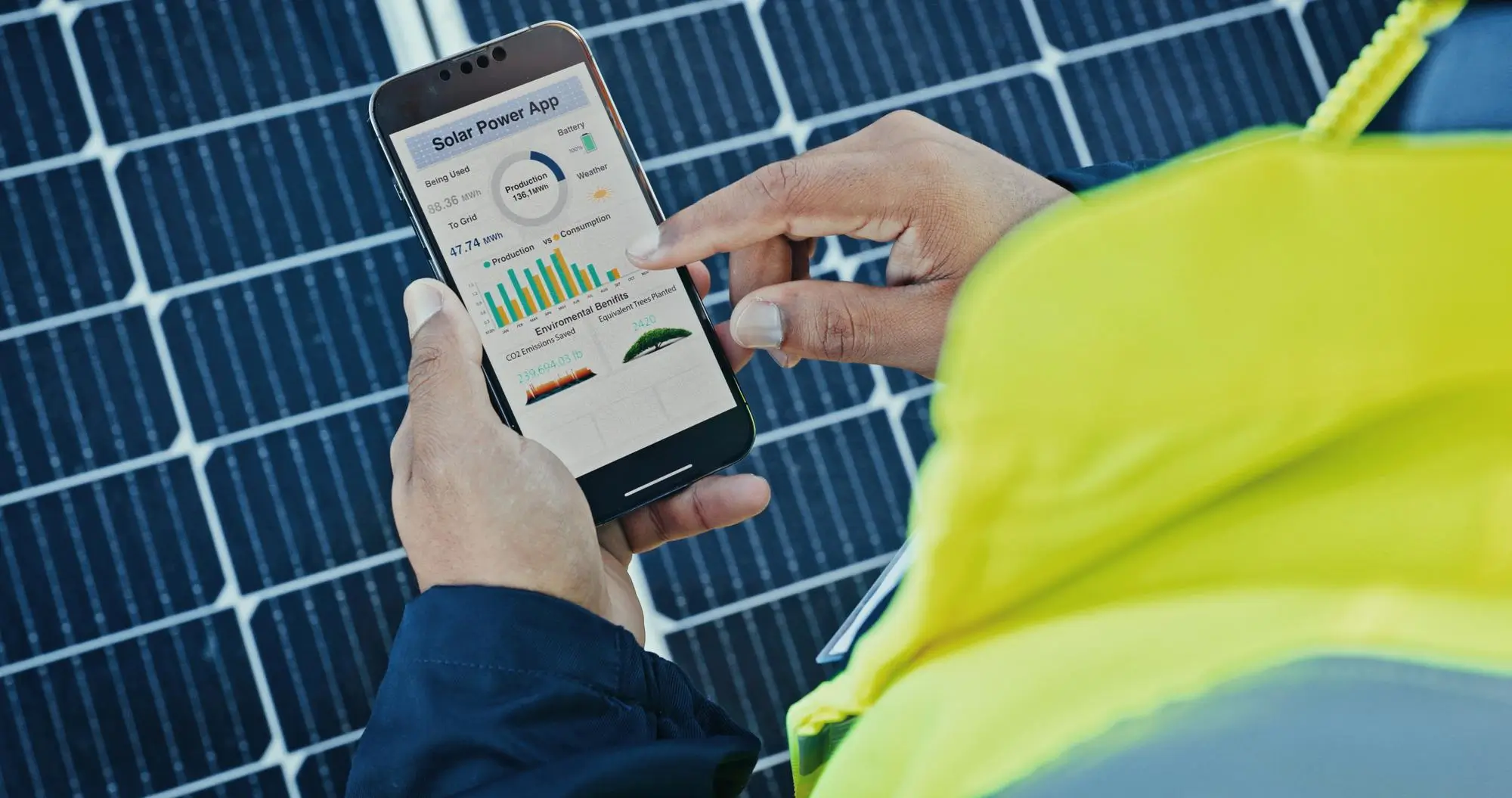
If you have solar panels, chances are you have a monitoring app sitting on your phone somewhere, possibly one you set up during installation and haven’t opened since. That’s a missed opportunity, because your monitoring app is one of the most useful tools you own for making sure your system is actually delivering what you paid for.

With 2026’s monitoring platforms, we’re well past simple “how many kWh did I generate today” dashboards. Today’s apps offer AI-powered fault detection, weather-integrated forecasting, detailed consumption breakdowns, and in some cases, direct control over battery and load scheduling, all from your phone.
This guide reviews the monitoring platforms most relevant to Sri Lankan solar owners in 2026, what each does well, and how to get genuine ongoing value from whichever one you’re using.

What Makes a Monitoring App Actually Useful

Before comparing specific platforms, it’s worth being clear about what separates a genuinely useful monitoring app from one that just displays numbers.

  • Real-time generation and consumption data, not just generation alone, since comparing the two is what reveals your actual self-consumption ratio
  • Historical data and trend analysis, so you can spot gradual performance decline rather than just today’s snapshot
  • Fault and anomaly alerts, ideally via push notification, so problems don’t go unnoticed for weeks
  • Weather integration for generation forecasting
  • Battery monitoring (state of charge and state of health) if you have storage installed
  • Accessible historical export (for your own records or for warranty claims)

With that framework in mind, here’s how the major platforms available to Sri Lankan solar owners stack up.

Platform-by-Platform Review

Huawei FusionSolar App

Given Huawei’s strong inverter market presence in Sri Lanka, FusionSolar is likely the most widely used monitoring app among local solar owners. It offers a clean, comprehensive dashboard covering generation, consumption, and battery data (where applicable), along with AI-based fault detection that has improved noticeably in recent platform versions. String-level monitoring gives visibility down to individual panel groups, which is valuable for catching localised issues like shading or panel faults.

Best suited for: Homeowners and businesses with Huawei inverters wanting a full-featured, actively maintained app with strong local support availability.

Sungrow iSolarCloud

Sungrow’s platform covers both residential and commercial-scale monitoring well, with a particularly strong battery management interface for hybrid systems. The mobile app provides real-time alerts and a reasonably intuitive historical data view, making it a solid choice for households wanting deeper battery insight.

Best suited for: Hybrid system owners with Sungrow inverters who want detailed battery state-of-charge and cycling data.

SMA Sunny Portal / EnnexOS

SMA has a long-standing reputation for detailed technical monitoring, and their platforms reflect this, offering granular string-level data and strong historical reporting. ennexOS, their more recent enterprise-focused platform, adds fleet-level monitoring capability, which is particularly relevant for businesses or property managers overseeing multiple sites.

Best suited for: Technically minded users and commercial operators who want maximum data granularity and don’t mind a slightly steeper learning curve.

Fronius Solar.web

Fronius’s monitoring platform is well regarded for its clean historical data presentation and reliability. It doesn’t have quite the same AI-forward feature set as some competitors, but the fundamentals – accurate data, good uptime, and straightforward interface – are consistently solid.

Best suited for: Owners who prioritise stable, no-frills, dependable monitoring over cutting-edge AI features.

Growatt ShinePhone

Given the growing presence of Growatt inverters in the Sri Lankan residential market due to competitive pricing, ShinePhone is increasingly relevant. It covers the core monitoring functions well, with a straightforward interface that suits homeowners who want essential data without excessive complexity.

Best suited for: Budget-conscious residential installations wanting reliable, easy-to-use basic monitoring.

Independent / Third-Party Platforms (e.g., Solar Analytics)

For households or businesses with multiple inverter brands, or those wanting analysis independent of the manufacturer’s own platform, third-party monitoring services can aggregate data across different equipment into a single dashboard. These typically involve a modest subscription fee but offer brand-agnostic benchmarking and, in some cases, more sophisticated AI analytics than manufacturer apps provide natively.

Best suited for: Multi-site commercial operators or residential users with mixed or older equipment who want a unified, brand-independent view.

Getting More From the App You Already Have

Regardless of which platform your system uses, here’s a simple monthly routine that turns a passive app into an active management tool:

  • Week 1: Check your monthly generation total against the same month last year (or against your system’s expected output if newly installed) to catch any significant decline early
  • Week 2: Review your self-consumption ratio for the past month; if it’s below 65-70% for a household without EV or heavy daytime loads, consider whether load shifting adjustments could help
  • Week 3: Scan for any fault alerts or unusual dips in the daily generation graph that might indicate shading, a panel issue, or an inverter fault worth investigating
  • Week 4: If you have battery storage, check the state-of-health trend to catch any unexpected capacity decline early, well before it becomes a functional problem

This 10-minutes-a-month habit is often enough to catch performance issues months before they’d otherwise be noticed, potentially saving significant lost generation value over a system’s lifetime.

Common Mistakes or Myths

  • Myth: “All monitoring apps are basically the same.” Feature depth varies considerably, particularly around AI fault detection, battery analytics, and weather integration. It’s worth understanding what your specific app does and doesn’t offer.
  • Mistake: Setting up the app during installation and never opening it again, missing the early warning signs of gradually declining performance.
  • Mistake: Not enabling push notifications for fault alerts, relying instead on periodically remembering to check the app manually.
  • Myth: “If the app shows a number, my system must be performing correctly.” Numbers need context; comparing against expected output, historical trends, and industry benchmarks (like performance ratio) is what reveals whether a number is actually good.
  • Mistake: Not knowing your login credentials for the monitoring platform, particularly relevant for homeowners who purchased a home with an existing solar installation and never obtained account access from the previous owner or installer.

Expert Recommendations

If you’re not sure which monitoring platform your system uses, or you’ve lost access to your account, this should be one of the first things resolved with your installer or maintenance provider. Monitoring access is a fundamental part of managing your solar investment, not an optional add-on.

For households and businesses finding their manufacturer’s app limiting, particularly around predictive analytics or multi-system aggregation, a third-party monitoring layer is worth evaluating, especially for commercial operations managing multiple sites.

Whatever platform you use, set a recurring monthly reminder to review your data using the routine outlined above. Consistency in checking is what actually delivers value; the most sophisticated monitoring platform in the world provides no benefit if it’s never opened.

Hayleys Solar’s installations include full monitoring setup and account handover as standard, and our team can also help restore access or configure monitoring for systems originally installed by other providers.

Frequently Asked Questions

There isn’t a single “best” app independent of your hardware; the right choice is almost always the platform matching your inverter brand, since these offer the deepest integration and most accurate data for your specific equipment. The comparison above should help you understand what to expect from your particular platform.

Check the inverter unit itself; the brand and model are typically printed on a label on the unit. Alternatively, your original installation documentation or your solar installer can confirm this if you’re unsure.

Most manufacturer apps (Huawei FusionSolar, Sungrow iSolarCloud, SMA Sunny Portal, Fronius Solar.web, and Growatt ShinePhone) are included free with your inverter purchase. Third-party independent platforms typically charge a modest subscription fee, usually in the range of USD 50–150 annually for residential use.

Small discrepancies can occur due to metering differences or billing cycle timing, but numbers should be broadly consistent. Significant, consistent discrepancies are worth investigating with your installer, as they may indicate a metering or configuration issue.

This varies by platform and inverter capability. Many modern hybrid inverter apps allow you to adjust battery charge/discharge settings, set export limits, and, in some cases, control connected smart loads directly from the app, in addition to displaying data.

Conclusion

Your solar monitoring app is a genuinely powerful tool that most Sri Lankan solar owners underuse. Whether you’re working with Huawei, Sungrow, SMA, Fronius, Growatt, or a third-party platform, the core habit that matters most is checking in regularly and understanding what the numbers are telling you, not simply which brand of app you happen to have.

If your current monitoring setup feels limited or inaccessible, or you’re simply unsure how to interpret what you’re seeing, the Hayleys Solar team is happy to walk through your specific platform with you or discuss upgrade options for more advanced AI-driven monitoring.

Solar Is Safe - But Not Automatically

Solar power has an excellent overall safety record, and a properly installed, well-maintained system poses minimal risk to your household. That said, “properly installed and well-maintained” is doing a lot of work in that sentence. Like any electrical system carrying meaningful current, and solar systems do involve both DC and AC electricity, often at levels higher than typical household wiring, safety depends on correct installation, quality components, and basic ongoing vigilance from the homeowner.

This matters even more in Sri Lanka’s specific conditions: tropical heat, monsoon rains, coastal salt air in many regions, and the occasional severe storm all place real demands on solar hardware and installation quality. Most safety issues with solar systems don’t come from the technology itself; they come from poor installation practices, substandard components, or neglected maintenance.

This guide covers what every Sri Lankan homeowner with (or considering) solar should know to keep their system safe for the full 25+ years of its intended life.

Where the Real Risks Lie

Solar systems carry a few genuine risk areas worth understanding, not to cause alarm, but because awareness is the first step to prevention.

DC Arc Faults

The DC wiring between panels and the inverter carries continuous current whenever the sun is up, unlike AC circuits, DC arcs don’t naturally extinguish and can generate sustained heat if a connection is loose, damaged, or improperly made. This is one of the more serious potential failure points in a solar installation, which is why quality connectors and proper torque specifications during installation matter enormously.

Rooftop Structural Load

Solar panels and their mounting structures add weight and wind-load considerations to a roof that wasn’t necessarily designed with this in mind. Poor structural assessment before installation can lead to mounting failures, particularly during Sri Lanka’s monsoon storms with sustained high winds.

Battery Fire Risk

Lithium battery systems, while generally very safe with quality cells and proper battery management systems, can pose fire risks if damaged, improperly installed, poorly ventilated, or if low-quality cells without adequate protection circuitry are used.

Grid Interconnection Safety (Anti-Islanding)

A properly configured grid-tied or hybrid inverter must automatically disconnect from the grid during a power outage, a feature called anti-islanding protection. This protects utility workers who may be repairing lines, believing them to be de-energised. A misconfigured system that continues feeding the grid during an outage creates a genuine electrocution hazard for line workers.

Local Conditions That Affect Safety

Monsoon and Storm Exposure

Sri Lanka’s south-west and north-east monsoon seasons bring heavy rain and, in some years, damaging winds. Mounting systems need to be rated for local wind-load conditions, with particular attention to coastal areas and elevated locations where wind exposure is more severe. Loose or corroded mounting hardware is one of the most common issues found during post-monsoon inspections.

Coastal Salt Corrosion

Homes within a few kilometres of the coastline face accelerated corrosion of mounting hardware, junction boxes, and electrical connections due to salt-laden air. Marine-grade or appropriately coated components are important in these areas, and more frequent inspection intervals are advisable.

Lightning Exposure

Sri Lanka experiences a notable frequency of lightning activity, particularly during inter-monsoon periods. Solar installations should include appropriate surge protection devices (SPDs) on both the DC and AC sides, along with proper earthing/grounding, to protect against lightning-induced surges.

Heat and Thermal Cycling

Daily heating and cooling cycles, combined with consistently high ambient temperatures, place ongoing thermal stress on electrical connections. This makes periodic inspection of connection points, which can loosen slightly over years of thermal expansion and contraction, a meaningful part of long-term system safety.

What a Safety Inspection Actually Checks

A thorough annual solar safety inspection should cover the following areas, useful as a checklist whether you’re evaluating your own maintenance provider or simply understanding what “good maintenance” looks like:

  • Visual inspection of all panels for cracks, delamination, hot spots, or physical damage
  • Mounting hardware check for corrosion, loosening bolts, and structural integrity, with particular attention after monsoon season
  • DC connector inspection for signs of overheating, discolouration, or water ingress
  • Thermal imaging scan (where available) to detect hot spots in panels, connections, or the inverter, which often indicate developing faults before they become visible or cause failures
  • Inverter inspection for error logs, unusual noise, excessive heat, or ventilation blockages
  • Earthing/grounding continuity check
  • Surge protection device inspection and replacement if indicators show they’ve absorbed a significant surge event
  • Battery enclosure inspection for ventilation adequacy, swelling, unusual odour, or temperature abnormalities (if battery storage is installed)
  • Anti-islanding and safety shutdown function test

This kind of comprehensive check typically takes a qualified technician 1–2 hours for a residential system and is worth treating as a non-negotiable annual investment, not an optional extra.

Common Mistakes or Myths

  • Myth: “Solar panels are dangerous because they can catch fire.” Properly installed systems with quality components have a very low fire incident rate; most documented solar fire incidents trace back to poor installation practices or substandard components, not the technology itself.
  • Mistake: Choosing the cheapest installer without checking their electrical licensing, experience with solar-specific wiring practices, or after-installation support and warranty terms.
  • Mistake: Never having the system professionally inspected after the initial installation, assuming that because it’s “working”, it’s automatically safe.
  • Myth: “Batteries are too dangerous to have at home.” Quality LiFePO4 batteries with proper battery management systems and correct installation (adequate ventilation, appropriate location away from living spaces where possible) have a strong safety record. The technology and chemistry matter significantly.
  • Mistake: Ignoring inverter error codes or warning lights, assuming the system will “sort itself out”. Persistent fault codes should always be investigated promptly.
  • Mistake: DIY modifications or repairs to solar wiring by homeowners without electrical qualifications; this voids most warranties and creates genuine safety risk.

Expert Recommendations

Work only with installers who are properly licensed for electrical work and who provide clear documentation of the components used, including brand, model, and certification standards for panels, inverters, and (where applicable) batteries. Reputable components from established manufacturers carry international safety certifications (IEC standards for panels and inverters and UL or IEC standards for batteries) that matter for both safety and insurance purposes.

Commit to an annual professional inspection at minimum, with additional visual checks after any severe storm event. For coastal properties, consider whether a more frequent inspection interval, perhaps every 6 months, is warranted given accelerated corrosion risk.

If you have battery storage, familiarise yourself with your specific battery’s normal operating indicators (temperature range, LED status meanings) so you can recognise if something seems abnormal, and keep the installation manual accessible.

Hayleys Solar’s maintenance contracts include comprehensive annual safety inspections covering all the areas outlined above, giving homeowners documented peace of mind that their system continues to meet safety standards year after year.

Frequently Asked Questions

The risk is low with properly installed, quality systems, but not zero, as with any electrical installation. The vast majority of documented incidents involve poor installation quality, damaged or substandard DC connectors, or ageing systems that haven’t been maintained. Professional installation and regular inspection substantially reduce this risk.

Yes, provided your system has appropriate surge protection and grounding, which should be standard on any professionally installed system. There’s no need to disconnect or cover panels during storms.

Any unusual chemical odour, visible swelling, or excessive heat from a battery installation warrants immediate attention; power down the system if you can safely do so and contact your installer or maintenance provider promptly rather than waiting for a scheduled inspection.

This varies by insurer, but many now factor solar installations into standard home coverage without significant premium changes, particularly when the system was professionally installed with proper certification. It’s worth confirming with your specific insurer and providing installation documentation.

Ask for documentation of the components used, confirmation of electrical licensing, and details of the earthing and surge protection installed. A reputable installer will provide this without hesitation and should also offer a commissioning report confirming the system passed all safety checks at installation.

Conclusion

Solar power is one of the safest energy technologies available when it’s installed correctly and maintained consistently and considerably less risky than many homeowners initially assume. The key is treating safety as an ongoing responsibility rather than a one-time installation checkbox: quality components, qualified installation, and regular professional inspection are what keep a solar system safe for its entire operational lifetime.

If it’s been over a year since your system was last professionally inspected, or if you’re not entirely sure what your original installer checked, the Hayleys Solar maintenance team can carry out a comprehensive safety assessment and give you clear, documented answers.

The Free Savings Strategy Most Solar Owners Overlook

Ask most Sri Lankan solar owners what would improve their savings, and you’ll hear “more panels” or “a bigger battery”. Both are valid, but there’s a strategy that costs nothing and often delivers surprisingly large results: load shifting.

Load shifting simply means moving your heaviest electricity use, air conditioning, laundry, water heating, and cooking appliances to the hours when your solar panels are producing the most power. It’s less about generating more energy and more about making sure the energy you already generate is captured at its highest value, rather than exported cheaply or replaced by an expensive evening grid import.

This article goes deeper into the mechanics of load shifting specifically, the appliances that matter most, how to sequence them, and the realistic savings Sri Lankan households can expect.

Why Timing Beats Quantity

Every unit of solar electricity you generate has two possible fates if you don’t have a battery: it powers something in your home at that exact moment, or it gets exported to the grid. There’s no in-between, no saving it for later, unless you shift your usage to meet the generation or add storage to hold it.

This is the essential logic of load shifting: since you can’t (without a battery) move solar energy through time, you move your consumption through time instead to meet the energy when and where it’s available.

The appliances most worth shifting are the ones with three characteristics: they draw significant power, they don’t strictly need to run at a specific time of day, and they run for a meaningful duration. Air conditioners, washing machines, dishwashers, water heaters, pool pumps, and EV chargers all fit this profile well. Lighting and refrigeration, by contrast, are poor candidates; they need to run whenever needed and can’t simply be delayed to midday.

Sri Lanka Specific Application: Building Your Load-Shifting Schedule

For most Sri Lankan homes, the practical solar production window runs from roughly 8 AM to 4:30 PM, with the strongest output typically between 10:30 AM and 2:30 PM. This is your target zone for shiftable loads.

A realistic load-shifting schedule for a typical Sri Lankan household might look like this:

  • 6:00–8:00 AM: Essential-only usage (showers, breakfast prep, getting ready for work/school), minimal solar available yet, so keep this window lit
  • 8:00–10:00 AM: Solar ramping up, good window for water heater top-up if needed before the main midday charge.
  • 10:30 AM–2:30 PM: Peak solar window, ideal for washing machine, dishwasher, ironing, water heater main cycle, EV charging, and pre-cooling bedrooms.
  • 2:30–4:30 PM: Solar tapering, still useful for lighter tasks, finishing laundry cycles, topping up battery if installed.
  • 5:00 PM onwards: Solar declining sharply, minimise new heavy loads; rely on stored battery power if available, otherwise this becomes grid-import territory.

Households where most adults are away at work during the day face a real practical challenge here, which is exactly where appliance timers and delay-start functions (covered below) become essential rather than optional.

The Air Conditioner Case Study

Air conditioning deserves special attention because it’s typically the single largest electricity consumer in Sri Lankan homes that have it, and it offers one of the best load-shifting opportunities through a technique called pre-cooling.

Consider a household that currently runs its bedroom AC from 9 PM to 5 AM, entirely outside solar hours, meaning 100% of that consumption comes from the grid or an already-depleted battery. By contrast, a pre-cooling strategy works like this:

  • 1:00–3:00 PM: Run the AC in bedrooms (unoccupied at this time) using peak solar power, cooling the room and building thermal mass in walls and furnishings well below the eventual comfort temperature.
  • 3:00–9:00 PM: AC is off or running minimally; the room stays cooler for longer due to the thermal pre-cooling effect and reduced heat gain if curtains are kept closed.
  • 9:00 PM onwards: AC needs to work less hard to reach and maintain a comfortable sleeping temperature, since it’s starting from a lower baseline.

This technique won’t eliminate evening AC use entirely, but it commonly reduces evening AC runtime by 20–35%, directly cutting your highest-value (most expensive) hours of consumption while increasing your midday solar self-consumption.

Tools That Do the Work For You

The honest challenge with load shifting is that most people aren’t home to manually start the washing machine at 11 AM on a workday. This is where a few practical tools remove the friction entirely:

Delay-start appliance functions

Most modern washing machines, dishwashers, and rice cookers include a delay-start timer. Set it before leaving for work in the morning, and the appliance runs during peak solar hours automatically.

Smart plugs and timer switches

For appliances without built-in timers, an inexpensive smart plug or mechanical timer switch achieves the same result, scheduling power delivery to align with your solar generation window.

Water heater timers

If your water heater doesn’t already have a programmable timer, this is one of the highest-value, lowest-cost additions for load shifting, since water heating is typically a substantial and flexible load.

Inverter-based hybrid system load outputs

More advanced hybrid inverters include dedicated smart load outputs that can be programmed to activate specific circuits only when solar generation exceeds a defined threshold, effectively automating load shifting at the system level rather than the appliance level.

Common Mistakes or Myths

  • Myth: “Load shifting only makes a small difference.” For households without batteries, load shifting is often the single biggest lever available, since it directly determines your self-consumption ratio.
  • Mistake: Shifting loads to very early morning (7-8 AM), assuming that counts as “solar hours”. Generation is still ramping up at this time and may not yet cover a large appliance load, meaning you’d still draw partly from the grid.
  • Mistake: Focusing only on the washing machine and ignoring larger, more impactful loads like water heating and air conditioning.
  • Myth: “I work all day, so load shifting isn’t possible for my household.” Delay-start timers and smart plugs solve exactly this problem; you don’t need to be physically present to shift a load.
  • Mistake: Not accounting for seasonal variation. Load-shifting windows should be adjusted slightly during monsoon periods when solar generation patterns shift.

Expert Recommendations

Start with an honest audit of your three or four biggest electricity-consuming activities and identify which ones are genuinely time-flexible. For most households, this shortlist is water heating, laundry, air conditioning (via pre-cooling), and, where relevant, EV charging or pool pump operation.

Rather than trying to overhaul your entire routine at once, we typically recommend shifting one or two major loads first, monitoring the impact on your bill for a full billing cycle, and then expanding from there. This makes the change sustainable and lets you see the real financial impact before committing to further adjustments.

For households finding that behavioural shifting alone isn’t closing the gap, particularly those with limited daytime occupancy, pairing load shifting with a modest battery addition often achieves the best of both worlds, capturing solar value even during hours when shifting isn’t practical.

Frequently Asked Questions

This varies by household, but Sri Lankan homes that successfully shift 2–3 major loads (particularly water heating and AC pre-cooling) commonly see self-consumption improve by 15–30 percentage points, translating into meaningful reductions in evening grid import and associated tariff costs.

Yes, though the value shifts slightly. With a battery, load shifting reduces how much battery capacity you need to cover evening demand, which can extend your battery’s usable lifespan and reduce how often it cycles to full depth.

Water heating is usually the easiest starting point, most water heaters already have or can easily have a timer added, and hot water usage is rarely time-critical to the exact hour.

The principle is identical, though the specific loads differ; commercial refrigeration cycling, industrial equipment scheduling, and staff shift timing all become load-shifting levers for business operations, often with larger absolute savings given higher overall consumption.

To a significant degree, yes. Combining appliance delay-start functions, smart plugs, and (where available) hybrid inverter smart load outputs can automate the majority of load shifting with minimal day-to-day manual intervention.

Conclusion

Load shifting is one of the most cost-effective strategies available to Sri Lankan solar owners; it requires no new hardware investment for most households, just a thoughtful realignment of when things happen in your day. Combined with the behavioural tips in our related guide on lowering your electricity bill, it forms the foundation of getting the most value from a solar investment you’ve already made.

If you’d like help identifying your household’s specific highest-impact load-shifting opportunities or want to explore how a battery could extend these savings further, the Hayleys Solar team is ready to help you build a plan around your actual usage data.

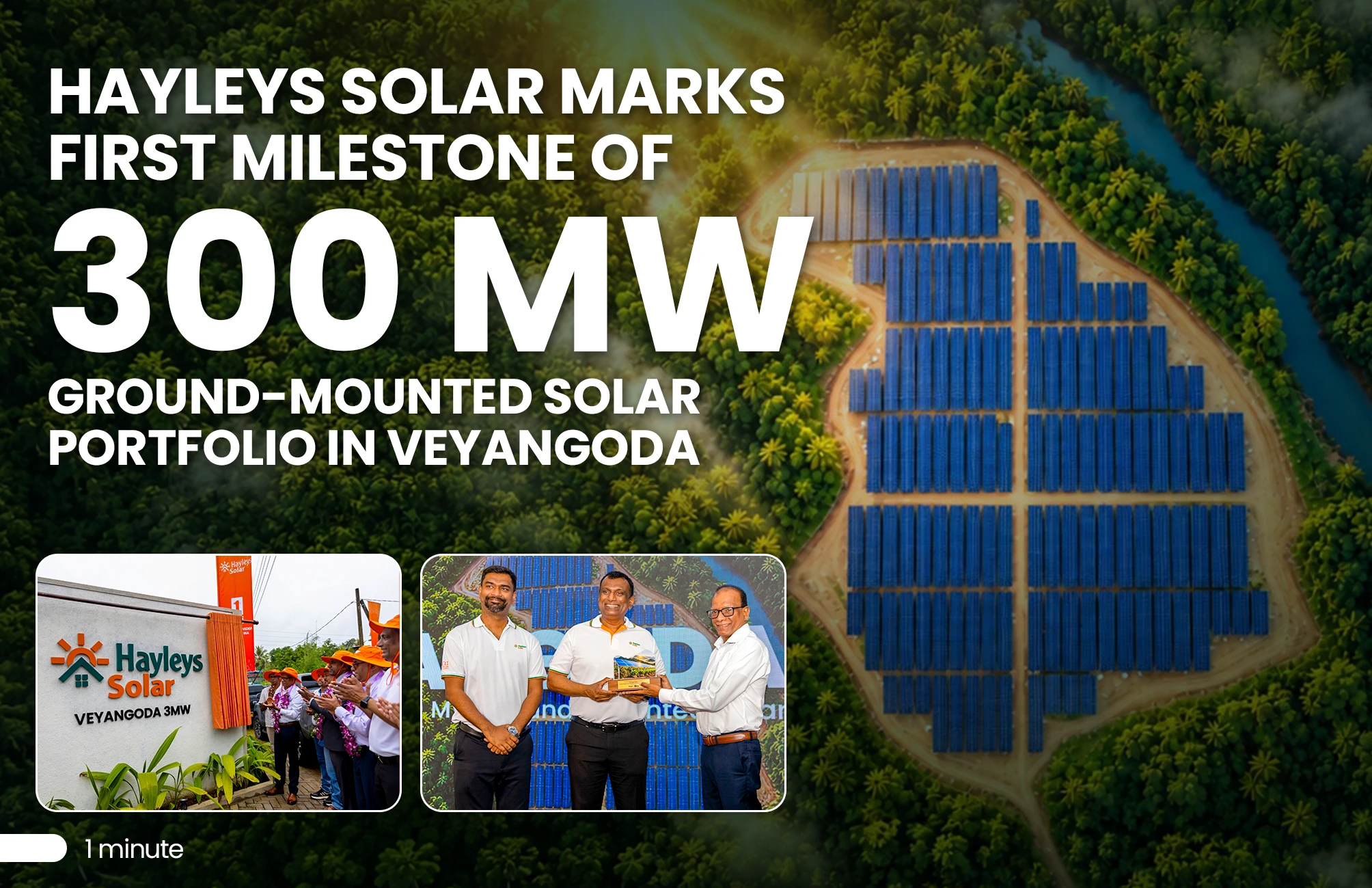
Hayleys Solar, Sri Lanka’s No. 1 renewable energy solutions provider, marked a major milestone in its renewable energy journey with the opening of its 3MW Veyangoda Ground-Mounted Solar Project, with Hon. Anura Karunathilake, Minister of Energy, gracing the occasion.

The project marks the first of Hayleys Solar’s planned 300MW portfolio of ground-mounted solar power projects across Sri Lanka, further strengthening its commitment to expanding large-scale renewable energy solutions.

Hayleys Solar is part of Hayleys Fentons Limited, under the Hayleys Group – Sri Lanka’s most diversified blue-chip conglomerate with a business legacy spanning nearly 150 years across 17 sectors. The Veyangoda project reflects the Group’s continued investment in expanding its renewable energy footprint in line with its long-standing commitment to sustainable innovation and nation-building.

Located adjacent to the Aththanagalla Oya, the project was designed to withstand challenging environmental conditions, including potential flooding during heavy rainfall. Following a detailed assessment using historical data from the Irrigation Department, Hayleys Solar implemented an elevated solar mounting structure with increased clearance and safety margins, together with elevated inverter supports and customised cable routing systems to enhance the project’s resilience.

Highlighting the importance of private sector participation in Sri Lanka’s energy transition, Hon. Anura Karunathilake, Minister of Energy, said: “Building a secure and sustainable energy future for Sri Lanka requires us to harness the potential of renewable energy while encouraging greater participation from the private sector. Projects such as these demonstrate how investment, innovation and climate-resilient solutions can come together to support this national priority. We encourage more such initiatives that can strengthen our renewable energy capacity and contribute to a cleaner and more sustainable Sri Lanka.”

Hasith Prematillake, Managing Director of Hayleys Fentons Limited, said: “The Veyangoda project demonstrates our commitment to developing renewable energy solutions that respond to the realities of our environment. By integrating climate-resilient engineering with innovative land utilisation, we have created a solar installation that not only withstands challenging site conditions but also delivers greater value from the available land.”

The project comprises 4,143.36 kWp of DC capacity and 3MW of AC capacity, featuring 640W bifacial solar panels, and is expected to generate approximately 6,351,770.88 kWh of clean electricity annually – enough to meet the annual electricity needs of around 2,700 average Sri Lankan households¹ while avoiding approximately 4,339.53 tonnes of CO₂ emissions each year.

With an average clearance of approximately 2.7 metres above ground level, the elevated structure also enables productive use of the land beneath the solar panels. As part of an agrivoltaic initiative, the space will support the cultivation of vegetables such as Scotch bonnet pepper and brinjal, enabling agricultural production alongside renewable energy generation.

Roshane Perera, Deputy Managing Director – Energy, Hayleys Fentons Limited, said: “Our Veyangoda project showcases how innovative solar designs can deliver multiple benefits from a single site. The elevated configuration enhances flood resilience while improving airflow beneath the panels and supporting greater utilisation of reflected sunlight through bifacial technology. The planned agrivoltaic initiative further demonstrates how renewable energy generation and agriculture can coexist productively.”

The Veyangoda project reinforces Hayleys Solar’s commitment to advancing resilient, sustainable and innovative renewable energy solutions while supporting Sri Lanka’s transition towards a cleaner energy future.

The 3 MW Hayleys Solar Veyangoda Ground-Mounted Solar Project, inaugurated as the first project under the 300 MW ground-mounted solar rollout.

A commemorative plaque being presented to Hon. Anura Karunathilake, Minister of Ports and Civil Aviation and Minister of Energy, by Mr. Hasith Prematillake, Managing Director, and Mr. Roshane Perera, Deputy Managing Director – Energy of Hayleys Fentons Limited

Your Home Is Getting Smarter - Is Your Solar System Keeping Up?

Smart home technology has quietly become mainstream in Sri Lanka. Smart plugs, app-controlled air conditioners, video doorbells, and voice assistants are now common purchases for middle- and upper-income households across Colombo and beyond. What’s less common but growing fast is connecting all of that smart technology to your solar system so it works together, rather than as separate, disconnected gadgets.

When solar, battery storage, and smart home devices are properly integrated with AI-based coordination, something interesting happens: your home starts making small, continuous decisions on your behalf, decisions that would be tedious or impossible to manage manually every day. It shifts your air conditioner’s schedule based on tomorrow’s weather forecast. It notices your evening peak usage pattern and pre-charges the battery to cover it. It quietly reduces the moments when you’re pulling expensive grid power during peak demand periods.

This guide breaks down what smart home and solar integration actually look like in practice and how AI is making “peak time avoidance” achievable without you having to think about it every day.

What Does AI Actually Do in a Smart Solar Home?

It helps to separate three distinct layers that make up a smart, AI-integrated solar home.

Layer 1: Data collection

Smart meters, inverter monitoring, and connected appliances continuously report real-time data on how much solar is being generated, how much the home is consuming, what each individual appliance is drawing, and what the battery’s state of charge is.

Layer 2: AI analysis and prediction

This is where things get genuinely useful. AI algorithms process that data alongside external inputs like weather forecasts and historical usage patterns to predict what’s coming: how much solar will likely be generated tomorrow, when your household’s peak demand periods typically occur, and which devices are the biggest contributors to your peak load.

Layer 3: Automated action

Based on those predictions, the system takes action automatically, delaying non-urgent loads, pre-cooling or pre-heating spaces during surplus solar hours, adjusting battery charge/discharge schedules, and, in advanced setups, temporarily reducing non-essential loads during genuine peak demand moments.

The combination of these three layers is what separates a “smart home with solar” from a genuinely AI-optimised energy system. Many Sri Lankan homes have the first layer (basic monitoring) but not the second or third, meaning the intelligence and automation potential is sitting unused.

Sri Lanka Specific Application: Why Peak Time Avoidance Matters Locally

Sri Lanka’s electricity tariff structure includes elements that make peak-time consumption meaningfully more expensive for many households and businesses, particularly during evening hours when solar generation has dropped off but household demand, cooking, lighting, air conditioning, and entertainment, is at its highest.

This evening mismatch is exactly the gap that smart home AI integration is designed to close. Rather than the home passively drawing whatever grid power it needs from 6 PM onwards, an AI-managed system can have already anticipated this gap during the day and pre-positioned battery charge, pre-cooled the home, or scheduled discretionary loads to avoid it.

There’s also a resilience angle that resonates strongly in the Sri Lankan context. AI-managed systems that understand your typical consumption patterns can prioritise essential loads (refrigeration, lighting, Wi-Fi, medical equipment) automatically during grid instability or outages, extending how long your battery reserve lasts for what matters most.

AI in Load Management: How It Works Day-to-Day

Time-Based Usage Optimisation

AI systems learn your household’s rhythm over the first few weeks of operation, when you typically shower, cook, do laundry, and go to bed. They use this pattern recognition to anticipate demand rather than simply reacting to it, pre-positioning battery charge or adjusting HVAC settings ahead of predictable demand spikes.

Battery Optimisation

Rather than following a fixed charge/discharge schedule, AI-managed batteries adjust dynamically. On a day with strong morning sun and a cloudy forecast for the afternoon, the system might prioritise filling the battery early. On a day when your calendar data (if integrated) suggests you’ll be out all evening, it might allow a lower reserve threshold, knowing peak evening demand won’t materialise that day.

Weather-Responsive Scheduling

Integrating weather forecast data allows the system to make smarter decisions a day in advance, for instance, running discretionary high-load tasks like laundry today if tomorrow is forecast to be overcast, rather than risking a low-solar day with a full task list.

A Typical AI-Managed Day

Here’s what a well-integrated smart solar home might look like on a typical weekday in Colombo:

  • 6:00 AM: System checks the day’s weather forecast; clear skies expected. Sets an optimistic battery charge plan for the day.
  • 7:30 AM: Solar generation begins. The smart system delays the water heater (already used briefly for morning showers) from running a full reheat cycle until closer to 10 AM.
  • 10:00 AM – 2:00 PM: Peak solar window. The system runs the washing machine, tops up EV charging if applicable, and fully charges the home battery.
  • 2:30 PM: The system begins pre-cooling bedrooms slightly, anticipating the family’s return in the early evening.
  • 5:30 PM: Solar output starts declining. System shifts to prioritising battery discharge over grid import for all household loads.
  • 6:00 PM – 9:30 PM: Peak household demand window (cooking, lighting, entertainment, AC). System draws primarily from the pre-charged battery, minimising grid import during this expensive period.
  • 10:00 PM onwards: If battery reserve is low, the system may switch to grid import for essential loads only, having already avoided the most expensive peak hours.

None of these decisions require the homeowner to lift a finger once the system is configured, which is precisely the point.

Business vs Residential Use Cases

For residential users, AI-driven smart home integration is primarily about comfort-neutral savings, reducing bills and improving resilience without requiring lifestyle sacrifices, since most of the optimisation happens automatically in the background.

For businesses, the stakes are often higher and the potential savings larger. Commercial premises, retail stores, small offices, restaurants, can use AI-driven load management to specifically target demand charge reduction (see our commercial solar coverage for more detail on how demand charges work), automatically curtailing non-critical loads like decorative lighting or non-essential HVAC zones during the specific 15-30 minute windows that would otherwise set a costly peak demand reading for the entire month.

Common Mistakes or Myths

  • Myth: “Smart home integration and solar are separate purchases that don’t need to talk to each other.” The real value comes from integration; a smart plug that doesn’t know your solar generation status is just a basic timer with an app.
  • Mistake: Buying smart devices from many different, incompatible ecosystems (different apps, no shared automation platform), which prevents true AI-driven coordination across the whole home.
  • Mistake: Expecting AI optimisation to work well immediately. Most systems need 2–4 weeks of data collection to learn household patterns before automated decisions become genuinely accurate.
  • Myth: “AI energy management is only for large, expensive smart homes.” Many hybrid inverters now include basic AI load management as a standard feature, accessible to typical residential installations.
  • Mistake: Not reviewing or adjusting AI system settings after a change in household routine (new work-from-home schedule, new occupants, new major appliance), the system’s learned patterns can become outdated.

Expert Recommendations

If you’re building a smart home around solar, prioritise compatibility from the start. Choose a hybrid inverter with open communication protocols or a manufacturer ecosystem (Huawei, Sungrow, SMA, and others all offer varying degrees of smart home integration) that can coordinate with your chosen smart home platform, rather than assembling devices that operate in isolation.

For most residential clients, we recommend starting with core integration, smart water heater control, AC scheduling, and battery-aware load management before expanding into more elaborate whole-home automation. This delivers the bulk of the peak-avoidance benefit without unnecessary complexity.

Frequently Asked Questions

A battery significantly increases the value of AI integration because it gives the system something to actively manage, charging and discharging strategically. Without a battery, AI can still help with load scheduling and self-consumption timing, but the peak-avoidance benefit is more limited.

This depends on your inverter brand. Many major inverter manufacturers offer their own apps with basic automation, while more advanced setups can integrate with broader smart home platforms via compatible smart plugs, relays, and open APIs. Your installer should confirm compatibility with your specific inverter model.

It varies. Some AI features come bundled with modern hybrid inverters at no extra cost. Standalone smart home add-ons (smart plugs, load controllers) are relatively affordable. A full retrofit with a new AI-capable hybrid inverter is a larger investment, best evaluated alongside other retrofit needs.

For consistent routines (regular work schedules, predictable appliance use), accuracy improves significantly after a few weeks of data collection, often reaching 85%+ prediction accuracy for typical daily patterns. Highly irregular routines take longer to learn and may see more modest gains.

Quality systems always allow manual override; you can pause automation for a specific appliance or day at any time through the companion app, without disabling the rest of the system’s automation.

Conclusion

Smart home and solar integration represents one of the more exciting frontiers of home energy management in Sri Lanka, not because it’s flashy technology, but because it delivers genuinely practical savings by closing the gap between when solar is generated and when households actually need power most.

If you’re curious what AI-driven load management could look like in your specific home, the Hayleys Solar team can assess your current system’s compatibility and recommend a sensible, phased path toward smarter, more automated energy use.

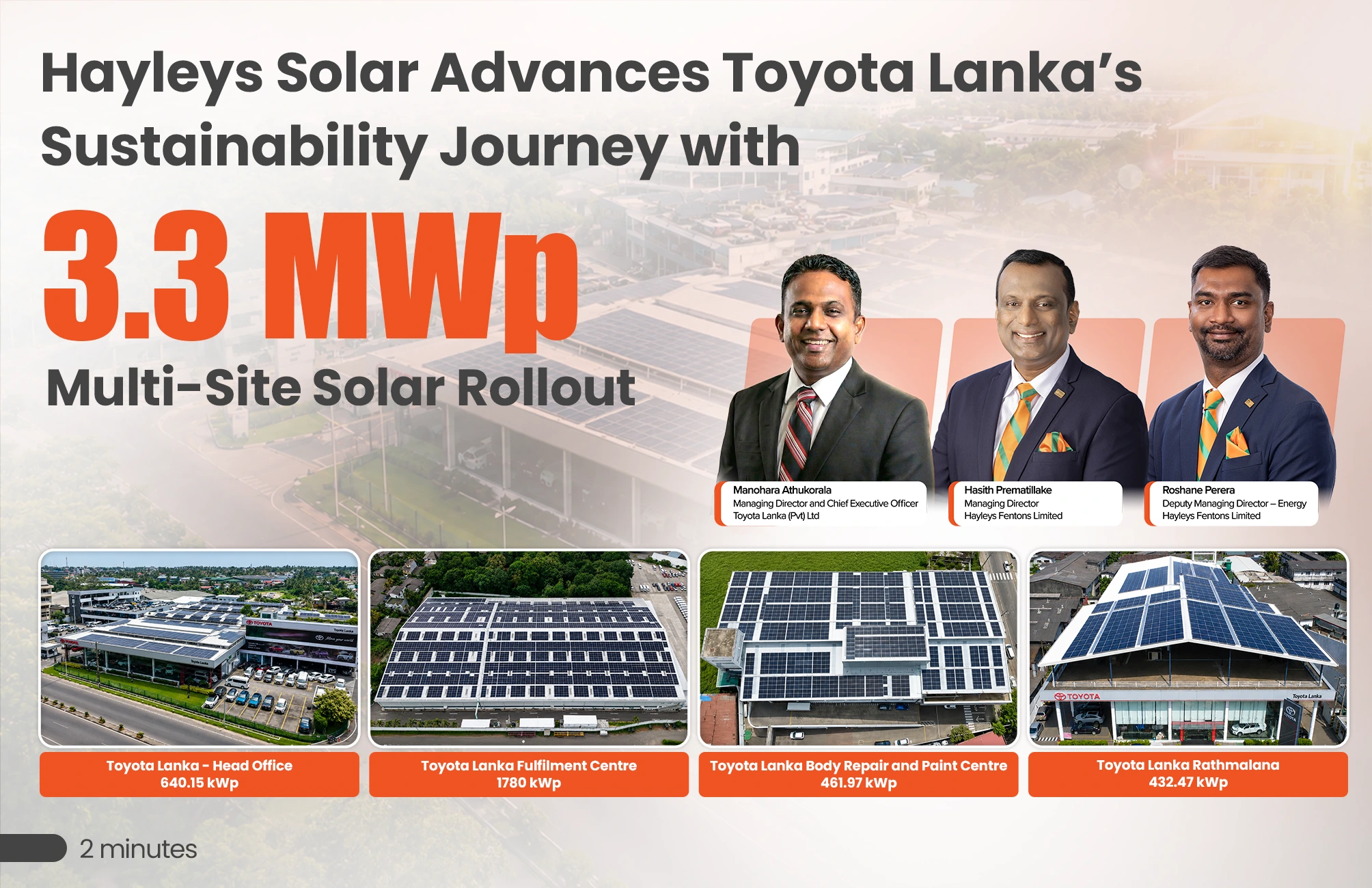
Hayleys Solar, Sri Lanka’s No. 1 solar solutions provider, has completed a major solar energy transformation for Toyota Lanka (Private) Limited, installing a combined 3.3 MWp of solar generation capacity across four of the automotive group’s key facilities nationwide. The rollout is expected to generate roughly 4.6 GWh of clean electricity a year, enough to supply close to 1,900 average Sri Lankan households annually, while cutting an estimated 2,300 tonnes of CO₂ emissions each year.

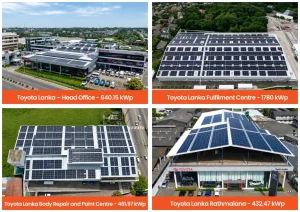
The project spans four facilities: Toyota Lanka Head Office (640.15 kWp), the Toyota Lanka Body Repair and Paint Centre (461.97 kWp), the Toyota Lanka Ratmalana facility (432.47 kWp), and the Toyota Lanka Fulfillment Centre, delivered in two phases (585.28 kWp and 1,194.75 kWp), totaling 3,314.62 kWp. Designing and delivering a phased build-out of this size for a single client group showcases Hayleys Solar’s ability to plan, sequence, and execute large, multi-site commercial solar programmes, not just individual installations.

Mr. Manohara Atukorala, Managing Director / Chief Executive Officer of Toyota Lanka, described the project as a reflection of the company’s long-term commitment to sustainable operations and its contribution to Sri Lanka’s transition towards clean energy.

“Partnering with Hayleys Solar has enabled us to move beyond a single-site initiative towards a coordinated, company-wide solar strategy. This marks an important step in Toyota Lanka’s long-term sustainability journey. As we continue to expand our islandwide presence, with the goal of establishing a network of 30 branches across Sri Lanka by 2026, we are equally committed to integrating renewable energy solutions across our operations. Through initiatives such as this, we aim to reduce our carbon footprint and ensure that our business growth goes hand in hand with greater environmental responsibility.”

For Hasith Prematillake, Managing Director of Hayleys Fentons Limited, the project is a clear example of what’s possible when a leading Sri Lankan business partners with the company on a long-term, group-wide clean energy strategy. “Toyota Lanka’s decision to scale solar across four of its facilities reflects the kind of ambition we want to see more of in the corporate sector, and it reinforces Hayleys Solar’s position at the forefront of large-scale commercial and industrial solar in Sri Lanka.”

Commenting on the project, Roshane Perera, Deputy Managing Director – Energy of Hayleys Fentons, said, “This project reflects the continued confidence that leading corporates place in Hayleys Solar to deliver reliable, high-quality solar solutions across multiple locations. Our proven technical capabilities, strong project management expertise and island-wide execution capacity enable us to support organisations such as Toyota Lanka in advancing their long-term sustainability goals through scalable clean energy solutions.”

As rooftop and ground-mounted solar become increasingly central to Sri Lanka’s clean energy transition, Hayleys Solar continues to expand its footprint in the large-scale commercial and industrial segment, positioning multi-site, phased programmes like this one as a blueprint for how Sri Lankan businesses can decarbonise at scale.

Owning Solar Panels Isn't the Same as Using Them Well

Here’s something we hear a lot at Hayleys Solar: “I installed solar panels two years ago, and my bill is still higher than I expected.” It’s a fair frustration, and it usually comes down to one thing: the system was installed correctly, but the household’s daily habits weren’t adjusted to match it.

Solar panels don’t work like a light switch you flip once and forget. They generate power on their own schedule, dictated by the sun. Your electricity bill savings depend heavily on how well your household’s actual usage lines up with that schedule. Two identical homes with identical solar systems can end up with very different bills, purely because of when they run the washing machine, the air conditioner, or the water heater.

The good news is that this is entirely within your control, and the adjustments needed are often small. This guide walks through exactly how to get more out of the solar system you already have, no new hardware required, just smarter timing and a bit of awareness.

Core Explanation: How Solar Savings Actually Work

To understand why timing matters so much, it helps to understand the two ways solar can save you money.

Self-consumption

This is when you use solar power the moment it’s generated, running your fridge, TV, or air conditioner directly off sunlight hitting your roof. This is the most valuable form of solar savings because it directly replaces electricity you would otherwise have paid CEB or LECO to import at the full retail tariff rate.

Grid export (net metering)

If your panels generate more than your home is using at that moment, the surplus goes to the grid. Under Sri Lanka’s net metering scheme, this earns you a credit, but typically at a rate lower than what you’d pay to import power later. So while exporting isn’t wasted, it isn’t as valuable to you as using the power directly.

The strategic takeaway is simple: the more of your daily electricity use you can shift into the hours when your panels are producing peak power, the more of your consumption becomes free self-consumed solar instead of either an evening grid import or a lower-value export.

Sri Lanka Specific Application: Working With Our Sun, Not Against It

Sri Lanka sits close to the equator, which actually works in our favour; solar generation is fairly consistent across most of the year compared to countries with harsh winters. Generally, solar output ramps up from around 7:30 to 8:00 AM, peaks between 10:30 AM and 2:30 PM, and tapers off by around 5:30–6:00 PM, with some seasonal variation between the southwest and northeast monsoon periods.

That midday window, roughly 10 AM to 2 PM, is your golden hour for running anything power-hungry. If your household’s biggest consumers happen to run during this window, you’re capturing maximum value from your system. If they mostly run before 8 AM or after 6 PM, your system is likely exporting a good chunk of its generation while you separately pay for grid electricity in the evening.

It’s also worth noting that Sri Lanka’s current tariff structure includes stepped/tiered pricing for many domestic customers, meaning your marginal cost per unit increases as your monthly consumption rises. Shifting usage to solar hours doesn’t just save on the unit cost; it can also help keep your total consumption within a lower tariff band.

Data / Example Breakdown: A Real Household Comparison

Let’s compare two households with identical 5 kW solar systems and identical monthly consumption of 600 kWh.

Household A - No behaviour changes

  • Runs washing machine at 7 PM, water heater on a fixed morning timer at 6 AM, AC mostly used 8 PM–11 PM
  • Self-consumption ratio: approximately 45%
  • Result: significant grid import in the evening at the full tariff rate, despite exporting solar surplus at midday

Household B - Adjusted usage patterns

  • Washing machine and dishwasher run between 11 AM and 1 PM
  • Water heater timer shifted to 10 AM–12 PM
  • AC pre-cools the house between 1 PM and 3 PM before the family returns home in the evening
  • Self-consumption ratio: approximately 72%

With Household B’s higher self-consumption ratio, a meaningfully larger share of their 600 kWh monthly usage is coming directly from free solar rather than the grid. Over a year, this kind of shift commonly translates into tens of thousands of rupees in additional savings, without spending a single rupee on new equipment.

Common Mistakes or Myths

  • Myth: “My panels are generating power, so I’m already saving as much as possible.” Generation and savings are not the same thing; savings depend on when you consume relative to when you generate.
  • Mistake: Running the water heater or washing machine on a fixed early-morning timer set years ago, before solar was installed, and never revisiting it.
  • Mistake: Assuming appliance timing doesn’t matter because “solar power is solar power.” Timing determines whether that power is self-consumed (high value) or exported (lower value).
  • Myth: “Turning things off at night saves the most.” In reality, moving consumption into daylight hours usually saves more than simply reducing overall usage at night, because it converts grid-priced electricity into free solar electricity.
  • Mistake: Not checking your monitoring app regularly, so shifts in household routine (a new occupant, a new appliance) go unnoticed and unaccounted for.

Expert Recommendations

Start by pulling up your solar monitoring app and looking at your generation curve for a typical clear day. That curve is your personal blueprint; it tells you exactly which hours are your highest-value hours for running major appliances.

From there, a few practical shifts tend to deliver the biggest impact for Sri Lankan households:

  • Set water heater timers to activate between 10 AM and 1 PM instead of early morning or evening
  • Run washing machines, dishwashers, and dryers around midday rather than after work
  • Pre-cool bedrooms with the AC in the early afternoon before peak evening heat, reducing how hard the AC has to work after 6 PM
  • Charge power banks, laptops, and other rechargeable devices during the day
  • If you’re planning a major appliance purchase, prioritise inverter-type ACs and refrigerators, which handle variable power draw more efficiently alongside solar

For households wanting to go further, pairing these behavioural changes with a modest battery addition can lock in high self-consumption even on the days when your routine can’t be shifted, a combination our team frequently recommends during consultations.

Frequently Asked Questions

Yes. For most Sri Lankan households without battery storage, shifting even 2–3 major daily activities into midday solar hours typically improves self-consumption by 15–25 percentage points, which shows up clearly on your monthly bill.

Not necessarily. Simple appliance timers, existing washing machine delay-start functions, and a habit of checking the weather and your monitoring app each morning are enough for most households. Smart plugs and automation can make it easier but aren’t required.

Timer-based appliances (washing machines with delay start, water heater timers, and pool pump timers) solve this well; you can set them up in the morning before leaving and let them run automatically during peak solar hours.

Solar panels still generate power on cloudy days, just at reduced output, often 20–40% of clear-day generation. Your self-consumption strategy still helps, though the absolute savings will be lower on those days.

Batteries and behaviour change aren’t either/or; they work best together. A battery captures surplus solar even when your routine can’t shift, while behavioural changes reduce how much battery capacity you actually need, often making a smaller, more affordable battery sufficient.

Conclusion

The single biggest lever most Sri Lankan solar households haven’t pulled yet isn’t a hardware upgrade; it’s a habit change. Aligning your daily routine with your system’s generation curve is free, immediate, and often delivers savings comparable to a modest equipment investment.

If you’d like a personalised usage assessment, reviewing your actual monitoring data and household routine to identify your highest-impact shifts, the Hayleys Solar team is happy to walk through it with you.