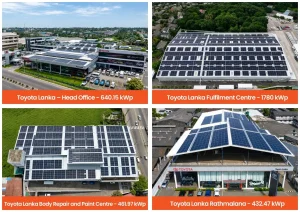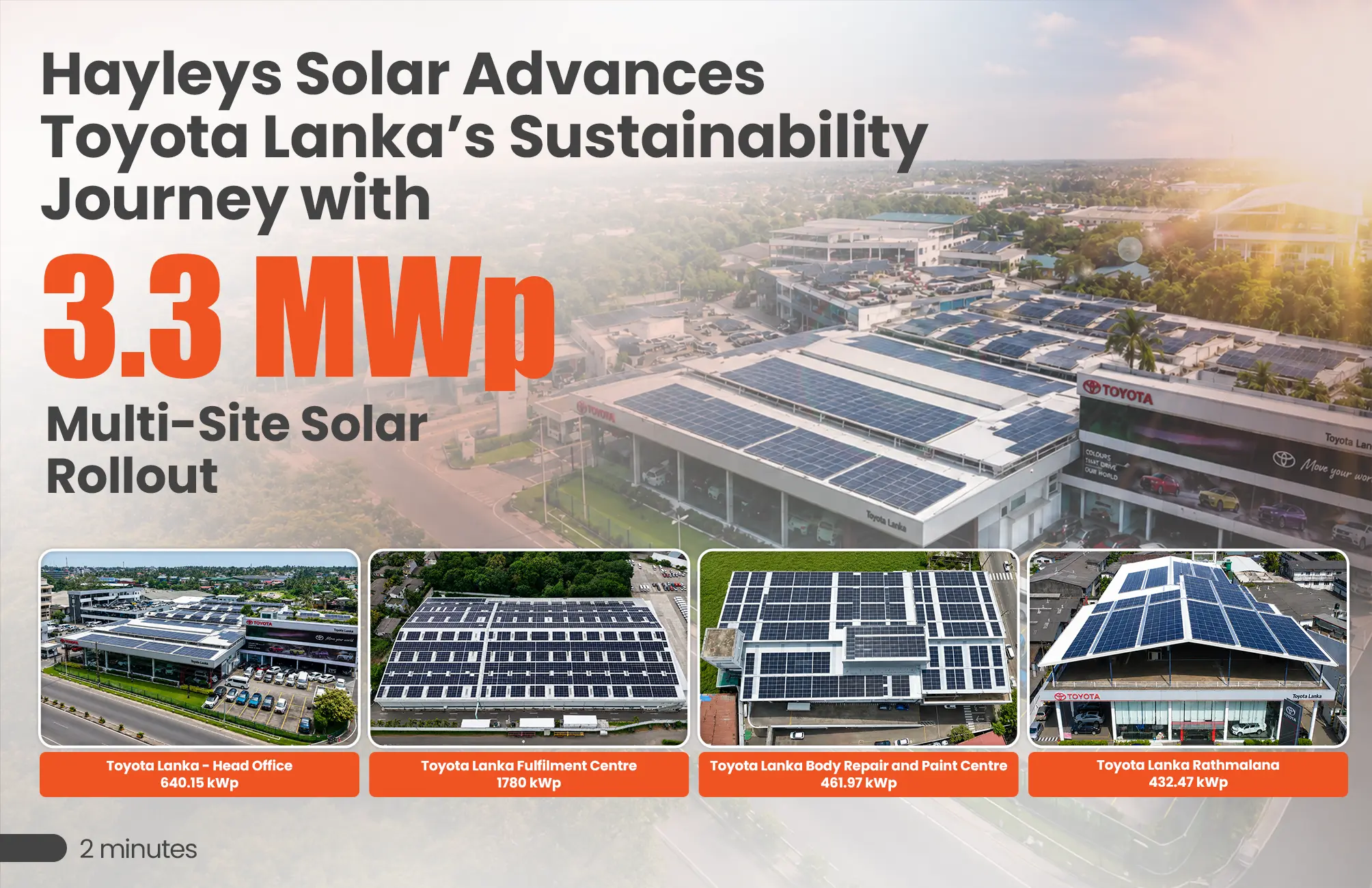
Hayleys Solar, Sri Lanka’s No. 1 solar solutions provider, has completed a major solar energy transformation for Toyota Lanka (Private) Limited, installing a combined 3.3 MWp of solar generation capacity across four of the automotive group’s key facilities nationwide. The rollout is expected to generate roughly 4.6 GWh of clean electricity a year, enough to supply close to 1,900 average Sri Lankan households annually, while cutting an estimated 2,300 tonnes of CO₂ emissions each year.
The project spans four facilities: Toyota Lanka Head Office (640.15 kWp), the Toyota Lanka Body Repair and Paint Centre (461.97 kWp), the Toyota Lanka Ratmalana facility (432.47 kWp), and the Toyota Lanka Fulfillment Centre, delivered in two phases (585.28 kWp and 1,194.75 kWp), totaling 3,314.62 kWp. Designing and delivering a phased build-out of this size for a single client group showcases Hayleys Solar’s ability to plan, sequence, and execute large, multi-site commercial solar programmes, not just individual installations.
Mr. Manohara Atukorala, Managing Director / Chief Executive Officer of Toyota Lanka, described the project as a reflection of the company’s long-term commitment to sustainable operations and its contribution to Sri Lanka’s transition towards clean energy.
“Partnering with Hayleys Solar has enabled us to move beyond a single-site initiative towards a coordinated, company-wide solar strategy. This marks an important step in Toyota Lanka’s long-term sustainability journey. As we continue to expand our islandwide presence, with the goal of establishing a network of 30 branches across Sri Lanka by 2026, we are equally committed to integrating renewable energy solutions across our operations. Through initiatives such as this, we aim to reduce our carbon footprint and ensure that our business growth goes hand in hand with greater environmental responsibility.”
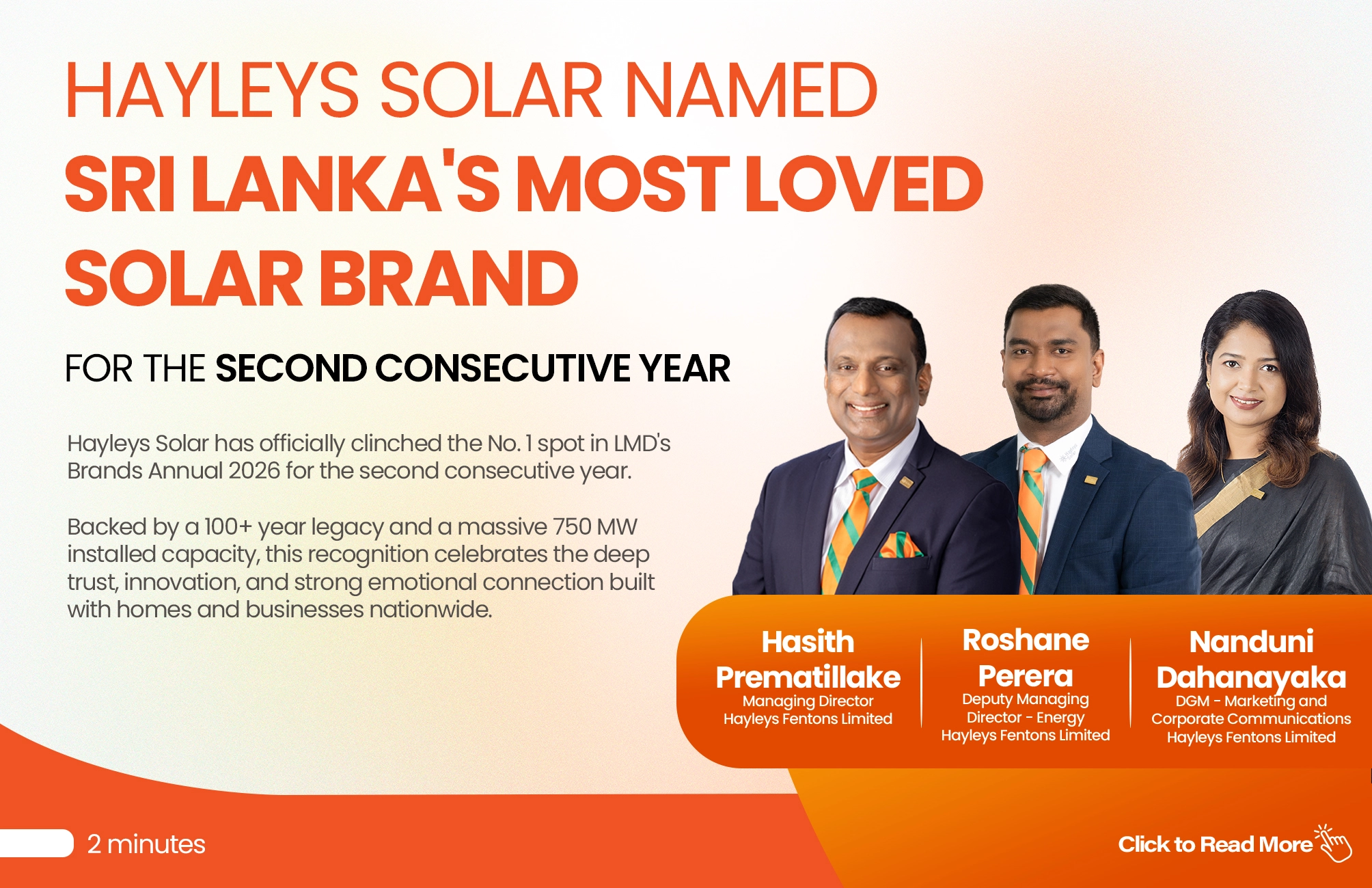
For Hasith Prematillake, Managing Director of Hayleys Fentons Limited, the project is a clear example of what’s possible when a leading Sri Lankan business partners with the company on a long-term, group-wide clean energy strategy. “Toyota Lanka’s decision to scale solar across four of its facilities reflects the kind of ambition we want to see more of in the corporate sector, and it reinforces Hayleys Solar’s position at the forefront of large-scale commercial and industrial solar in Sri Lanka.”
Commenting on the project, Roshane Perera, Deputy Managing Director – Energy of Hayleys Fentons, said, “This project reflects the continued confidence that leading corporates place in Hayleys Solar to deliver reliable, high-quality solar solutions across multiple locations. Our proven technical capabilities, strong project management expertise and island-wide execution capacity enable us to support organisations such as Toyota Lanka in advancing their long-term sustainability goals through scalable clean energy solutions.”
As rooftop and ground-mounted solar become increasingly central to Sri Lanka’s clean energy transition, Hayleys Solar continues to expand its footprint in the large-scale commercial and industrial segment, positioning multi-site, phased programmes like this one as a blueprint for how Sri Lankan businesses can decarbonise at scale.