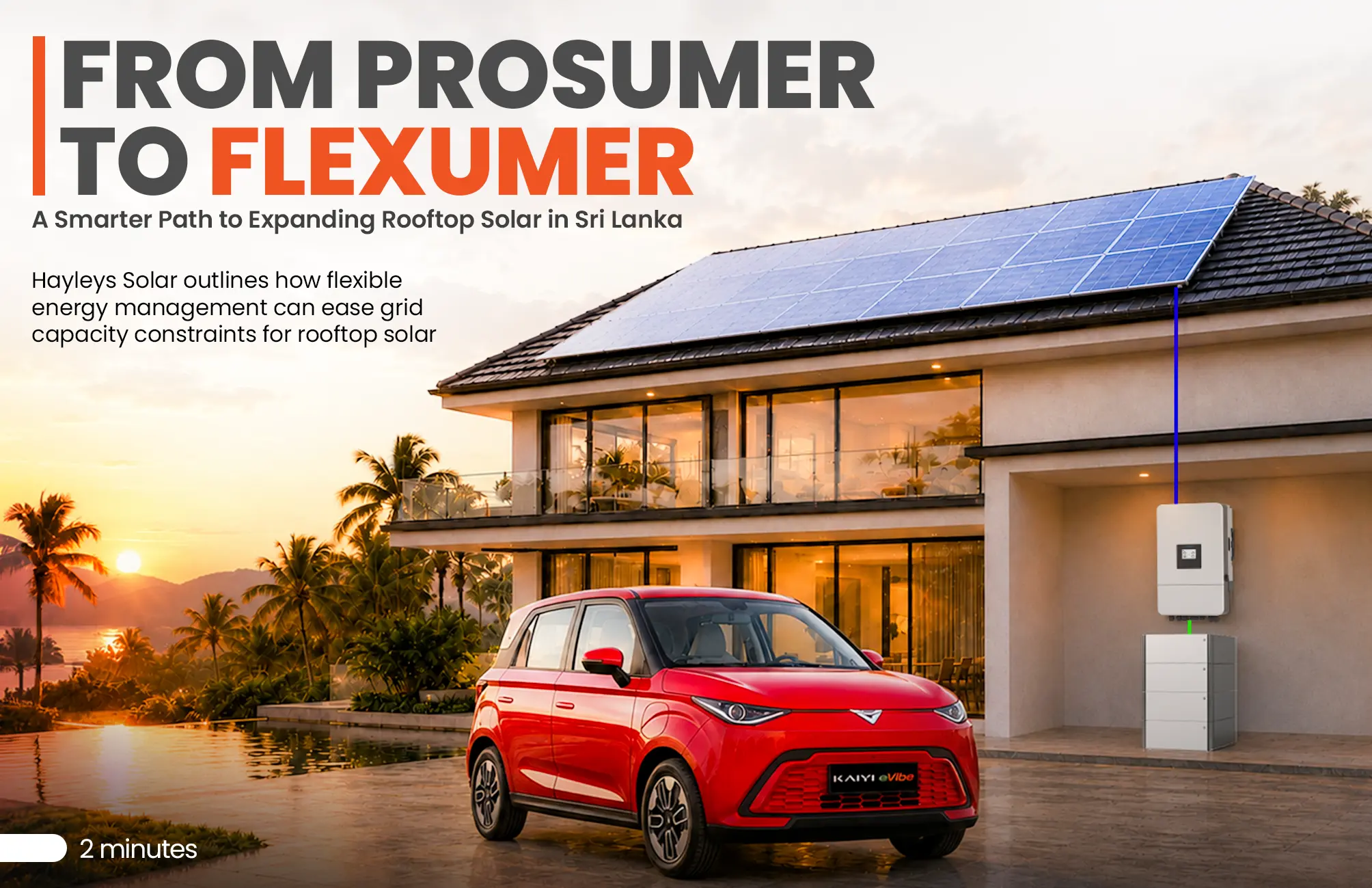
Hayleys Solar outlines how flexible energy management can ease grid capacity constraints for rooftop solar

As rooftop solar adoption grows across Sri Lanka, some households and businesses face difficulties obtaining grid clearance due to limitations in the existing electricity network. In certain areas, transformers and distribution lines may already be considered fully utilised, preventing additional solar systems from being connected to the grid.

Hayleys Solar believes that addressing this challenge requires smarter energy management alongside grid upgrades. To support this approach, the company is introducing the concept of the “Flexumer”, a flexible energy user who generates, consumes, stores and exports electricity based on national grid requirements.

Unlike a traditional prosumer, which exports surplus solar energy as it is generated, a Flexumer uses smart technologies to determine when electricity should be consumed, stored, or exported.

Instead of exporting all surplus solar generation during the day, a Flexumer can store energy in batteries, increase on-site consumption or export electricity when grid demand is higher. This reduces transformer loading and enables more rooftop solar systems to be connected within the same area.

Commenting on the concept, Roshane Perera, Deputy Managing Director – Energy, Hayleys Fentons Limited, said:

“Today, a 100 kW transformer may be considered fully utilised when only a limited number of households with 5 kW rooftop solar systems are connected to it. As a result, new solar applications may be restricted or rejected, even when customer demand is strong.

“However, if these customers operate as lexumers and intelligently manage when they consume, store, or export electricity, the same transformer may be able to accommodate many more rooftop solar systems while improving the quality and reliability of electricity without requiring immediate costly infrastructure upgrades.

“We must move beyond viewing customers simply as electricity producers and consumers. By enabling them to become flexible participants in the energy system, we can free up grid capacity, improve power quality, and help more Sri Lankans benefit from renewable energy.”

The Flexumer model could be particularly valuable in areas where customers are unable to obtain CEB clearance due to transformer capacity or other grid-related restrictions. Hybrid solar systems, battery storage, smart inverters, and intelligent energy management solutions can reduce unnecessary exports during congested periods while supporting the grid when electricity demand is higher

Greater flexibility could enable significantly more rooftop solar installations using existing network infrastructure while reducing the need for immediate grid upgrades.

According to Hayleys Solar, Sri Lanka’s renewable energy transition must now prioritise smarter energy management alongside continued solar deployment.

By transforming conventional solar customers (prosumers) into Flexumers, Hayleys Solar aims to help create a smarter and more responsive energy system that benefits customers, the Ceylon Electricity Board, and the country as a whole.

As Sri Lanka moves towards a cleaner and more decentralised energy future, smart energy management will be essential to overcoming grid limitations and enabling more homes and businesses to adopt rooftop solar.
Power interruptions are more than a temporary inconvenience for Sri Lankan households and businesses. A sudden blackout can disrupt children’s education, remote work, business operations and everyday life.

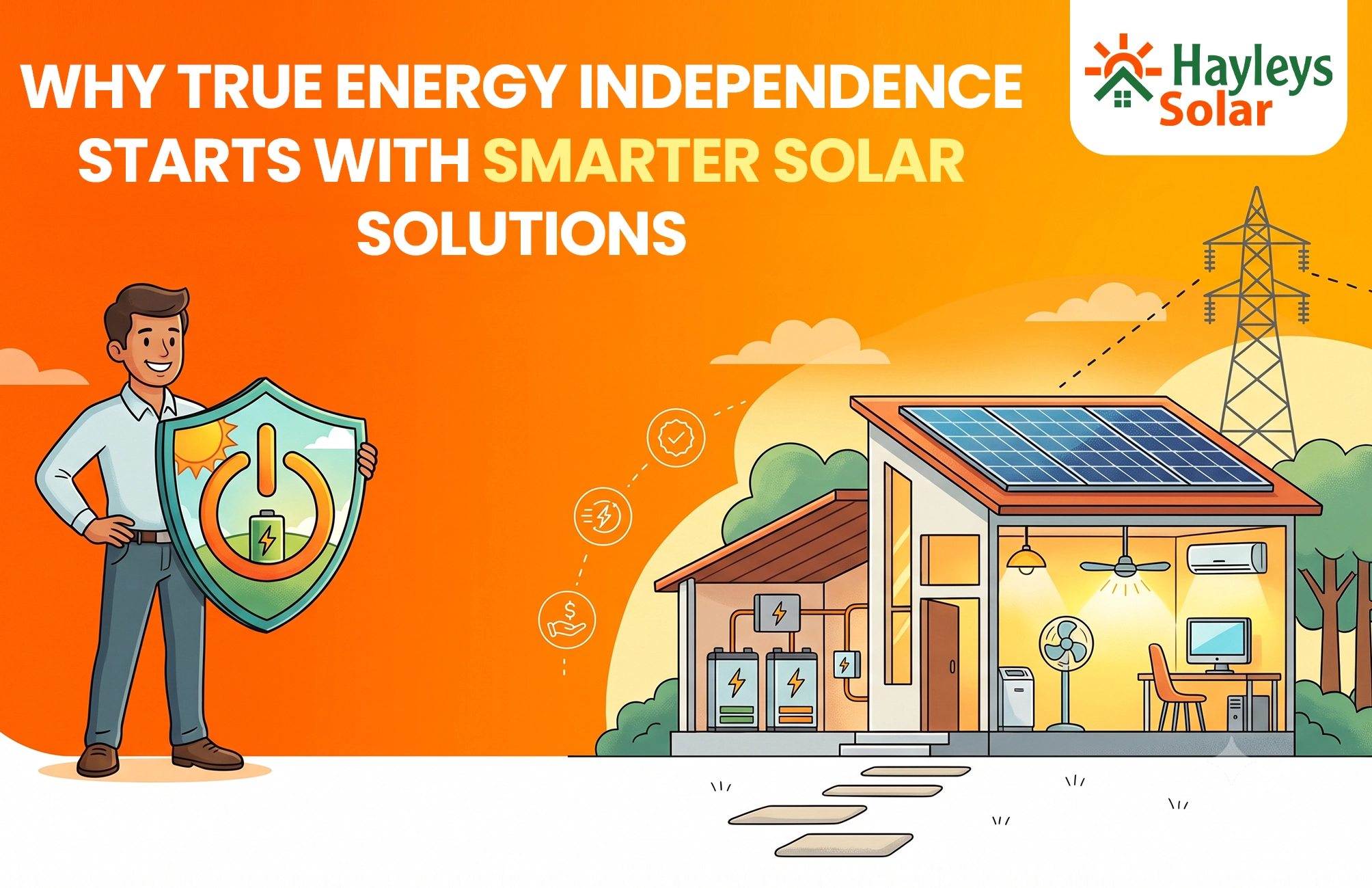
As Sri Lanka transitions towards renewable energy, many consumers are seeking greater energy security. However, energy independence does not necessarily mean disconnecting from the national grid. The smarter approach is to balance reliability, efficiency and financial practicality.

At Hayleys Solar, the renewable energy arm of Hayleys Fentons, we believe true energy independence is about having greater control over how energy is generated, stored and used.

Traditional grid-connected solar systems automatically shut down during a power outage for safety reasons. A Hybrid Solar System offers a more resilient alternative by combining solar panels, battery storage and grid connectivity. It allows consumers to use solar energy during the day, store excess power for later and maintain backup power when the grid fails.

For most households and small businesses, this provides a more practical solution than going completely off-grid, which often requires larger batteries and a significantly higher investment.

How Hybrid Solar Works in Real Life

Consider a small household that uses an air conditioner, refrigerator, washing machine and electric iron, with an average monthly consumption of 300 kWh. Without an electricity export arrangement, the household may receive a monthly bill of approximately LKR 20,350.

By installing a 3 kW hybrid inverter, 3 kWp of solar panels and a 5 kWh battery, the household could significantly reduce its grid consumption.

If 100 kWh is consumed during the day, this requirement could be supplied directly through solar energy. Assuming the battery provides approximately 4 kWh of usable energy per day, it could supply a further 120 kWh each month for night-time use.

The household would then need to purchase only around 80 kWh from the grid, potentially reducing the monthly electricity bill to approximately LKR 1,640.

A similar principle applies to a small office operating two air conditioners, ten computers and lighting, with an average monthly consumption of 600 kWh. Its monthly electricity bill may be approximately LKR 23,200.

Since most office activity takes place during the day, around 400 kWh could be consumed during working hours. A system comprising a 10 kW hybrid inverter, 10 kWp of solar panels and a 5 kWh battery could supply this daytime requirement directly through solar energy.

The battery could provide approximately 120 kWh per month for after-hours consumption, leaving only around 80 kWh to be purchased from the grid. This could reduce the monthly bill to approximately LKR 2,660.

These examples show that the best solar investment is not always the largest system. The ideal solution is one designed around the consumer’s actual daytime usage, night-time demand, essential appliances and budget.

Actual savings will vary depending on weather conditions, energy consumption, battery performance, system losses and the applicable electricity tariff. A detailed energy assessment is therefore essential before selecting a system.

For most homes and small businesses, energy independence is not about powering every appliance during an outage or completely leaving the grid. It is about ensuring that essential activities continue while reducing electricity costs and dependence on an unpredictable power supply.

At Hayleys Solar, we continue to help Sri Lankans adopt smarter and more sustainable energy solutions designed around real-life needs.

Because true energy independence is not about leaving the grid behind. It is about remaining in control when it matters most.