For many Sri Lankan homeowners, the biggest question about switching to solar isn’t whether it saves money – it’s how to afford the initial investment. While solar energy can drastically reduce or even eliminate electricity bills, the upfront cost of installation is often seen as a barrier.

The good news? There are multiple financing options available in Sri Lanka that make solar more accessible than ever. From bank loans to leasing arrangements and corporate financing plans, you don’t need to pay everything upfront to enjoy the benefits of renewable energy.

In this guide, we’ll explore the different financing pathways for solar panel systems in Sri Lanka, helping you choose the best option for your home.

Why Financing Matters

Solar power is one of the few investments that pays for itself—most homeowners achieve ROI within 4–6 years, while the panels continue generating free electricity for 20–25 years.

But if paying Rs. 1.5M – 5M upfront isn’t feasible, financing spreads the cost into manageable monthly payments. This means:

  • Immediate Savings: Your monthly loan repayment is often less than your old electricity bill.
  • Cash Flow Flexibility: No need to dip into savings.
  • Energy Independence: Enjoy the benefits of solar right away.

Option 1: Bank Loans for Solar Systems

Several leading Sri Lankan banks offer green energy or solar loans with preferential interest rates.

  • Tenure: 5–7 years (some extend up to 10).
  • Interest rates: Lower than standard personal loans.
  • Secured or unsecured options.
  • Immediate ownership of the system.
  • Can claim available tax or green energy incentives.
  • You carry responsibility for maintenance.
  • Loan approval may require credit checks and documentation.
Example: A 5 kW system costing Rs. 3M could be financed at Rs. 50,000 per month for 5 years, less than what many households currently pay for electricity.

Option 2: Solar Leasing

In a leasing model, you don’t buy the system upfront; instead, you lease it from a solar provider like Hayleys Solar.
  • You pay a fixed monthly lease fee.
  • The provider installs and maintains the system.
  • At the end of the lease (often 15–20 years), you may own the system outright.
  • Zero upfront cost.
  • Maintenance and service included.
  • Predictable monthly payments.
  • May not be as cost-efficient long-term compared to ownership.
  • Less flexibility in system upgrades.

Option 3: Power Purchase Agreements (PPA)

Under a PPA, you pay only for the electricity generated by the solar system, not the system itself.

  • A solar company installs panels on your roof at no upfront cost.
  • You buy the generated electricity at a fixed rate (lower than the CEB tariff).
  • The provider handles installation, monitoring, and servicing.
  • No upfront investment.
  • Lower per-unit costs than grid electricity.
  • No worries about operation and maintenance.
  • Savings may be smaller than owning the system outright.
  • Long-term contracts (10–20 years) may apply.
Option 4: Corporate and Employer Schemes

Some employers and corporate partnerships (often through sustainability initiatives) offer solar financing for staff or corporate buildings.

  • Deduction from salary in instalments.
  • Employer-subsidised rates.
  • Partnerships with financial institutions.

Option 5: Hybrid Solutions

Hayleys Solar often combines bank loans and net metering savings into hybrid financing models. This ensures repayments are aligned with actual savings, making the switch risk-free.

Factors to Consider When Choosing a Financing Option

  • Monthly Budget: Can you afford a higher repayment for faster ownership, or do you prefer lower monthly payments over a longer term?
  • System Size: Larger systems mean higher cost—but also higher savings.
  • Energy Tariffs: Rising electricity prices mean even greater long-term ROI.
  • Flexibility: Do you want to own your system outright or simply enjoy cheaper electricity?

Frequently Asked Questions

Ownership via bank loan usually provides the highest lifetime savings.

Yes, many banks extend financing to hybrid systems with storage.

Yes, depending on the availability of green energy subsidies.

Financing is no longer a barrier to going solar in Sri Lanka. Whether you prefer to own your system outright through a loan, enjoy hassle-free leasing, or pay only for the power you use via a PPA, Hayleys Solar can customise a plan to fit your needs.

Explore Hayleys Solar’s financing options today and start saving on electricity from day one.

If you’ve ever wondered what it really takes to install a solar system in Sri Lanka – how long it takes, what the steps are, and what costs to expect – this guide is for you. At Hayleys Solar, we’ve simplified the process for thousands of homeowners and businesses.

Let’s walk you through everything from consultation to commissioning

Step 1: Initial Consultation and Site Survey

Your solar journey begins with a free consultation. Our team gathers key information:

  • Average monthly electricity bills
  • Roof orientation and structure
  • Future expansion needs

Next comes the site survey, where engineers inspect your roof, measure space, and assess shading.

Step 2: System Design and Proposal

Based on your energy profile, we design a customised solution. Your proposal includes:

  • Recommended system size (e.g., 5 kW)
  • Expected savings per month/year
  • Investment cost and financing options
  • Net metering or hybrid system recommendations

Timeline: 2–3 working days after site visit.

Step 3: Approvals and Documentation

Installing solar requires approvals from CEB/LECO. Hayleys Solar handles all documentation on your behalf.

  • Net Metering/Accounting application
  • Single Line Diagram (SLD) submission
  • Structural approvals (if required)

Timeline: 1–2 weeks depending on utility response.

Step 4: Installation and Commissioning

Once approvals are secured, installation begins.

  • Mounting panel frames on your roof
  • Installing solar panels
  • Connecting inverters and safety systems
  • Wiring and grid integration

Residential 3–5 kW systems → 3–5 days
Large residential or villa systems → 1 week
Commercial/industrial → 2–4 weeks

Step 5: Testing and Grid Connection

After installation:

  • Engineers conduct safety checks.
  • The system is connected to the grid under CEB/LECO supervision.
  • Your meter is replaced with a bi-directional one (for net meter

Timeline: 3–7 working days.

Step 6: Monitoring and After-Sales Support

Modern solar systems come with online monitoring platforms. You can track your system’s output, savings, and even CO₂ reduction.

Hayleys Solar also provides:

  • Scheduled maintenance
  • Remote troubleshooting
  • Performance guarantees

How Much Does Solar Installation Cost in Sri Lanka?

  • 3 kW residential system: Rs. 1.5M–1.8M
  • 5 kW system: Rs. 2.5M–3.2M
  • 10 kW system: Rs. 4.8M–6M
  • Panel type (monocrystalline vs. polycrystalline)
  • Inverter type (string vs. hybrid)
  • Roof modifications
  • Battery backup

Payback Period: Most households recover costs within 4–6 years.

Timeline Overview

  • Consultation & survey: 2–5 days
  • Design & proposal: 2–3 days
  • Approvals: 1–2 weeks
  • Installation: 3–7 days (residential)
  • Commissioning: 1 week

Why Choose Hayleys Solar for Installation?

  • Over 10 years of expertise in Sri Lanka
  • Partnerships with Tier-1 global solar brands
  • End-to-end service (consultation → approvals → aftercare)
  • 25-year panel warranties & reliable support

Installing solar in Sri Lanka is a clear, step-by-step process when handled by experts. With transparent costs, predictable timelines, and strong after-sales service, you can start saving on energy bills sooner than you think.

Ready to install solar? Contact Hayleys Solar on 0112 102 102 or visit our website at www.hayleyssolar.com for a free assessment and customised proposal.

Hayleys Solar, the renewable energy arm of Hayleys Fentons Limited, has secured a Silver Award at the Dragons of Sri Lanka 2025, part of the prestigious Dragons of Asia. The accolade was presented under the Integrated Marketing Campaign category for its flagship “Nayak Nowana Nayak” initiative.

The award-winning campaign showcased how Sri Lankan families and businesses can achieve zero electricity bills through solar adoption, while enjoying significant financial savings even with monthly financing premiums. To enhance accessibility, Hayleys Solar partnered with more than 15 of Sri Lanka’s leading banks and financial institutions, simplifying financing and accelerating solar adoption.

Deployed through a 360-degree marketing strategy, the campaign seamlessly integrated digital, traditional, and experiential channels to drive maximum visibility and impact. Phase two introduced testimonials from financial partners, offering authentic third-party validation of the financing model’s effectiveness.

A market-first innovation – the Hayleys Solar Savings Calculator – provided users with a transparent view of potential savings, increasing digital engagement and building long-term trust.

“Winning the Silver Award underscores the impact of Hayleys Solar’s integrated marketing strategy,” said Hasith Prematillake, Managing Director of Hayleys Fentons Limited, “while simultaneously enhancing community well-being and enabling households and businesses across Sri Lanka to adopt sustainable energy solutions with confidence.”

Roshane Perera, Director/Chief Executive Officer of Hayleys Solar, remarked: “For us, success means making solar power accessible to all. The campaign and the marketing approach have amplified that impact, easing the financial burden on households and businesses while advancing Sri Lanka’s clean energy future.”

Nanduni Dahanayaka, Deputy General Manager, Marketing and Corporate Communications, added: “Through the ‘Nayak Nowana Nayak’ campaign, we positioned solar power as both practical and aspirational, showcasing how strategic brand communication can inspire trust, drive adoption, and accelerate Sri Lanka’s clean energy transition. We extend our sincere gratitude to our agency partners and collaborators, whose creativity and dedication were instrumental in bringing this campaign to life.”

ව්‍යාපාර ලෝකයේ නමක් දිනා ගැනීම එතරම් පහසු කරුණක් නොවේ. නමුත් දශක ගණනාවක් පුරා එක ලෙසින් තම නාමය පාරිභෝගික ජනතාවගේ විශ්වාසය දිනා ගැනීමෙන් ව්‍යාපාර ලෝකය තුළ පෙරමුණේ තබා ගැනීමට හේලීස් සමූහ ව්‍යාපාරයට හැකි වී තිබේ. එලෙසින් ඇතිකර ගත් ඔවුන්ගේ සන්නාමයෙන් යුතු බොහෝ සේවා අතරේ සූර්ය පැනල සඳහා ද ඇති විශේෂත්වය ගැන දැන ගැනීම උදෙසා අපි හේලීස් සමූහ ව්‍යාපාරයේ ව්‍යාපෘති, බලශක්ති සහ මොබිලිටි (Projects, Energy and Mobility) අංශය නියෝජනය කරන හේලීස් ෆෙන්ටන්ස් ලිමිටඩ් හි කළමනාකාර අධ්‍යක්ෂක හසිත් ප්‍රේමතිලක මහතා හා එහි සූර්ය බලශක්ති අංශය වන හේලීස් සෝලා හි අධ්‍යක්ෂක සහ ප්‍රධාන විධායක නිලධාරී රොෂේන් පෙරේරා මහතා හමුවුණෙමු.

හේලීස් සමාගම අනුබද්ධිත අංශ 16ක් පවතී. ඉන් 50%ක පමණ නිෂ්පාදන අපනයන ආර්ථිකය සඳහා සැකසෙන අතර අනෙක් නිෂ්පාදන දේශීය වෙළෙඳපොළ සඳහා නිපදවයි. මේ නිසා හේලීස් සන්නාමය බොහෝ නිෂ්පාදන ක්ෂේත්‍රයන්හි රැඳී පවතිනවා. නමුත් හේලීස් ෆෙන්ටන්ස් තරමක් වෙනස් ක්‍රමයකට බිහි වන්නක්. ෆෙන්ටන්ස් වසර 106ක් පමණ අතීතයක් හිමි ලංකාවේ පරණම විදුලි ඉංජිනේරු ආයතනයක්. ෆෙන්ටන්ස් 2016 දී හේලීස් සමාගම විසින් අත්පත් කරගැනීමෙන් පසුව තමයි හේලීස් ෆෙන්ටන්ස් කියන නම හැදෙන්නේ. ෆෙන්ටන්ස් එකේ ෆෙන්ටන්ස් සෝලා නමින් වූ අංශයක් තිබුණා. එය පසුව හේලීස් සෝලා වලට පරිවර්තනය කිරීමෙන් මේ වන විට හේලීස් සෝලා සන්නාමය ඉදිරියට ගෙන යාමට අප සමත් වී තිබෙනවා. අදවන විට අපගේ සන්නාමය අති ප්‍රබල තත්ත්වයක තිබෙනවා. ඒ වගේම මේ වන විට අපි LMD හි 2025 වසරේ වඩාත් ජනාදරය දිනාගත් සන්නාමය (Most Loved Brand) ලෙසත්, Brand Finance හි වටිනාම සන්නාමයන් (Most Valuable brand) 100 අතරට තේරී පත් වූ එකම පුනර්ජනනීය බලශක්ති සන්නාමය ලෙසත්, CEO Magazine Sri Lanka හි ඔවුන්ගේ හොඳම සන්නාම 25 අතරට ශ්‍රී ලංකාවේ අංක 01 සූර්ය බලශක්ති විසඳුම් සපයන්නා ලෙස අපගේ ස්ථානය තහවුරු කරගැනීමටත් හැකි වීම අපට ආඩම්බරයක්.

දැනට හේලීස් සෝලා කියන සන්නාමයට වෙළෙඳපොළේ 25%ක පමණ වෙළඳපොළ හිමිකාරීත්වයක් තිබෙනවා. 2022 සිටම අපි මේ හිමිකාරීත්වය දිගටම පවත්වා ගැනීමට සමත් වුණේ හේලීස් සෝලා ගැන පාරිභෝගිකයන්ගේ ඇති විශ්වාසය හා කැමැත්ත නිසයි. ඒ වගේම ලංකාවේ පුනර්ජනනීය බලශක්ති ක්ෂේත්‍රයෙහි පසුගිය දා තිබුණු ටෙන්ඩර වලින් අපිට මෙගාවොට් 149ක භූමිය මත ඉදි කරන සෝලා සහ මෙගා වොට් 50ක සුළං බලය ලෙස අපිට මෙගාවොට් 199ක් ආයෝජනය කිරීමට ලැබී තිබෙනවා. ඊට අමතරව පෞද්ගලික අංශයේ මෙගාවොට් 15ක් අපිට ආයෝජනය කිරීමට හැකි වී තිබෙනවා. විදුලිබල නිෂ්පාදනයේ දී සාමාන්‍යයෙන් පාරිභෝගිකයන් කොටස් තුනකට වෙන් කරනවා. ඉන් එකක් ගෘහස්ථ ලෙසත්, අනික් කොටස වාණිජ සහ කාර්මික ලෙසත් අනෙක් කොටස විශාල ව්‍යාපෘති ලෙසත් ඛාණ්ඩ වෙනවා. විශාල ව්‍යාපෘතීන් ලෙස ගැනීමේ දී ලංකාවේ නම් විදුලිබල මණ්ඩලය එහි මූලිකත්වය ගෙන කටයුතු කරනවා.

එමෙන්ම අපගේ අලෙවියෙන් පසු සේවාව ගැන මෙහිදී කිව යුතුමයි. ලංකාව පුරාම විහිදුණු සේවා ජාලයක් අපට පවතිනවා. අපි ලංකාව පුරාම සූර්ය පැනල ස්ථාපනය කරන නිසා රට පුරාම විදුලි කාර්මික සහ තාක්ෂණික සේවකයන් අපි යොදවා තිබෙනවා. ඔවුන් මෙහෙයවීම කොළඹ සිට සිදු කළත් උතුරේ සිට දකුණ දක්වාම රට පුරා අපේ සේවා මධ්‍යස්ථානයන් ව්‍යාප්ත වී තිබෙනවා. ඊට අමතරව ඉදිරියට ස්ථාන 38ක කලින් පැවසූ මෙගාවොට් 199 ස්ථාපනය කිරීමට තිබෙන නිසාත් එයට අදාළ සේවක මඩුල්ලක් අවශ්‍ය වෙනවා. මේ අය එම ස්ථානයේ සිදු කරන සේවාවට අමතරව ඒ ආශ්‍රිත ගෘහස්ථ හා කර්මාන්තශාලා වල සූර්ය පැනල නඩත්තු කටයුතු සිදු කළ යුතු වෙනවා. මෙහිදී හේලීස් සෝලා නොවන වෙනත් සූර්ය පැනල වල නඩත්තු කටයුතු පවා අපි ලවා නඩත්තු කරගැනීමේ අවස්ථාව පාරිභෝගිකයන්ට අපි ලබා දී තිබෙනවා.

සෝලා පද්ධති සවිකර ඇති බිම්වල මීමැස්සන් වැඩියෙන් පැමිණෙන ශාක සිටුවීමේ ව්‍යාපෘතියක් ද මේ වන විට ආරම්භකර තිබෙන්නේ සමාජ සත්කාර්යයක් ලෙසටයි. මෙයින් ඒ අවට ගම්මානවල ජනතාවට මීමැසි පාලනය සිදුකර අමතර ආදායමක් ලබා ගැනීමේ හැකියාවත් පවතිනවා.

අපිට අවශ්‍ය වෙන්නේ ශ්‍රී ලංකාවේ පුනර්ජනනීය බලශක්තිය ව්‍යාප්ත කිරීමටයි. අපිට නොමිලේ ලැබෙන හිරු එළියෙන් හා සුළං බලයෙන් විදුලිය නිපදවිය හැකි නිසා පොසිල ඉන්ධන දහනයෙන් සිදුවන පරිසර දූෂණය අවම වෙනවා. ඒ වගේම පොසිල ඉන්ධන ගෙන ඒමට රජයට යන අධික වියදම ඉතිරිකර ගැනීමටද හැකියාව ලැබෙනවා. සෝලා සහ සුළං බලයට ආයෝජනය වන්නේ එක වරක් පමණයි. මේ සඳහා සිදු කළ යුතු ආයෝජන‍යෙහි වියදම අඩුයි. එකවරක් ආයෝජනය කිරීමෙන් වසර 25ක පමණ කාලයක් විදුලිය නිපදවිය හැකි නිසා ඩොලර් ඉතිරි වෙනවා. අපේ රට බලශක්තියෙන් ස්වයංපෝෂිත වීමෙන් කුමනාකාර ගැටලු පැමිණියත් නැවතත් බලශක්ති අර්බුදයක් ඇති නොවන බව කියන්න පුළුවන්.

දැන් ඉදිරියට විදුලියෙන් ක්‍රියා කරන රථ වාහන පැමිණීමේ ප්‍රවණතාව වැඩි වෙන නිසා විදුලි ඉල්ලුම ද වැඩි වෙනවා. අපේ රටට ගෙන්වන පොසිල බලශක්තියෙන් 33%ක ප්‍රමාණයක් වැය වන්නේ ප්‍රවාහන කටයුතු වෙනුවෙන්. ඉදිරියේ දී විදුලියෙන් මේ ප්‍රමාණයත් ඉතිරිකර ගැනීමට හැකියාව ලැබෙනවා නම් එය රටට විශාල වාසියක්.

සූර්ය බලශක්තියේ ඊළඟ පියවර වන්නේ බැටරි භාවිතයයි. සූර්ය බලය තිබෙන්නේ දහවල් කාලයට විතරක් නිසා මේ බැටරි වලින් දවල්ට නිපදවන සූර්ය බලශක්තිය කෝෂවල ගබඩා කිරීමෙන් රාත්‍රී කාලයේ දී එම විදුලිය මුදා හැරීම සිදු කරනවා. ලංකා විදුලිබල මණ්ඩලය විසින් මේ බැටරි ටෙන්ඩර් කිරීම සිදු කරනවා. මෙය ලබන වසරේ මැද භාගයේ දී ආරම්භ කළ හැකි අතර පෞද්ගලික අංශය මගින් දැනටත් මේ කටයුත්ත සිදු කරගෙන යනවා. ගෘහස්තව හයිබ්‍රිඩ් නැතිනම් දෙමුහුම් බැටරියක් මඟින් සූර්ය බලය ගබඩා කිරීමෙන් රාත්‍රියටත් එම බැටරියේ ඇති විදුලිය ලබා ගැනීමේ හැකියාව පවතිනවා.

ඊට අමතරව ලංකාවේ දැනට පවතින ලොකුම බැටරිය සවි කොට ඇත්තේත් හේලීස් සෝලා අපි විසින්. එය මෙගාවොට් පැය 2ක, ඒකක 2000ක් පමණ ගබඩා කළ හැකි විශාල බැටරියක්. මෙය වත්තල පෞද්ගලික ආයතනයක සවිකර තිබෙනවා. ඔවුන්ට දින 4ක කාලයක් විදුලිය විසන්ධි වුවත් මෙම බැටරියෙන් ආයතනයේ සියලු කටයුතු සිදු කර ගැනීමට හැකියාව තිබෙනවා.

සමහර ආයතන සූර්ය පැනල මඟින් විදුලිය ලබා ගැනීමට කැමැති වුවත් ඔවුන්ට එයට වඩා තම ආයතනයට යන්ත්‍ර සූත්‍ර ගැනීමේ වුවමනාවක් පවතිනවා නම් සූර්ය පැනල හා කෝෂ සඳහා අපේ ආයතනය ආයෝජනය කිරීමට සූදානම්. ඉන් ලැබෙන ප්‍රතිලාභය එම ආයතනයත් සමඟින් බෙදා ගැනීමෙන් ඉදිරියට යාමට හැකියාව තිබෙනවා. ඕෂන් ලංකා ආයතනය, සවුත් ඒෂියා ටෙක්ස්ටයිල් ආයතනය වැනි ආයතන මේ සඳහා උදාහරණ සපයනවා.

අපි බැංකු සහ මූල්‍ය ආයතන 30ක පමණ ප්‍රමාණයක් සමඟ සූර්ය පැනල සඳහා ණය පහසුකම් ලබා දීම වෙනුවෙන් ගිවිසුම්ගත වී තිබෙනවා.

නවතම ව්‍යාපෘතියක් ලෙස හේලීස් මොබිලිටි නමින් අනු ශාඛාවක් පවත්වාගෙන යනවා. එහි දැනට චෙරි මව්  ශාඛාවෙන් O&J නැතිනම් ලෝකයම දන්නා නාමයන් වන OMODA & JAECOO වගේම SRM  විදුලි හා දෙමුහුම් වාහන ගෙන්වීමට කටයුතු කරනවා. ඊට අමතරව ලෝකයේ දැවැන්තම විදුලි ආරෝපණ සේවා සපයන සමාගමක් වන StarCharge සමගින් අත්වැල් බැඳ ගනිමින් Charging Stations ලංකාවට හඳුන්වා දීමට කටයුතු කරගෙන යනවා.

මීට අමතරව හේලීස් සෝලා ආයතනය විසින් අපගේ අනාගත පරපුර මේ දේවල් ගැන දැනුවත් කිරීමේ හා සොබාදහම සමඟ ඒකාත්මික කිරීමේ අදහසින් චිත්‍ර තරඟ, ඒ වගේම ඉරමල සහ මී මැස්සා යන කතා පොත නොමිලේ දරුවන්ට බෙදා හැරීමට කටයුතු කරනවා. එසේම තවත් බොහෝ දේ ජාත්‍යන්තර පොත් ප්‍රදර්ශනයට සමගාමීව එම පරිශ්‍රයේදී සිදු කෙරෙනවා. Sun studio ලෙසින් ජාත්‍යන්තර පොත් ප්‍රදර්ශනයේ ඇති හේලීස් සෝලා කුටිය නම් කර තිබෙනවා.ඊට අමතරව සූර්ය සත්කාර සමාජ සත්කාර ව්‍යාපෘතිය යටතේ සත්කාර මධ්‍යස්ථාන 200ක් සඳහා නොමිලේ සූර්ය බලශක්ති පද්ධති 200ක් ලබා දීමට කටයුතු කරගෙන යනවා.

Switching to solar energy is one of the most effective ways for Sri Lankan homeowners to cut costs and contribute to a greener future. But with so many system options – different types of panels, inverters, and sizes – it can feel overwhelming to choose the right solution for your home.

At Hayleys Solar, we believe this decision should be simple, informed, and tailored to your household’s unique needs. In this guide, we’ll walk you step by step through the process of choosing the right solar panel system for your home in Sri Lanka.

Why Choosing the Right System Matters

A solar panel system is a long-term investment, with a lifespan of 20–25 years. Selecting the wrong system size, panel type, or inverter could mean underperformance, slower returns, or unnecessary expense.

The right system, however, will:

  • Cover most (if not all) of your electricity needs.
  • Pay for itself within 4–6 years.
  • Save you thousands of rupees every month.
  • Provide energy security in the face of rising tariffs.

Step 1: Assess Your Household Energy Needs

The first step is to calculate how much electricity your home uses.

  • Check your bills: Look at the average kWh usage from your last 6–12 months of CEB/LECO bills.
  • Identify peak usage: Note whether your household uses most power during the day (good for solar) or at night (may need batteries).
  • Plan ahead: If you plan to add new appliances (like an air conditioner or EV charger), factor that into future demand.

Example: A family consuming around 400 kWh/month would typically need a 3–5 kW solar system to offset most of their usage.

Step 2: Understand the Different Types of Solar Panels

  • Highest efficiency (18–22%).
  • Sleek black design works well with limited roof space.
  • Higher upfront cost but greater long-term performance.
  • Efficiency (15–17%).
  • Blue appearance, more affordable.
  • Require more space for the same output.
  • Lower efficiency (10–12%).
  • Lightweight and flexible, but less common in Sri Lanka.

Which is best?

For most Sri Lankan homes, monocrystalline panels are the ideal choice due to space efficiency and better heat tolerance.

Step 3: Choose the Right Inverter

The inverter is often called the “brain” of your solar system.

  • String Inverters: Most common; cost-effective; one inverter for all panels
  • Microinverters: Panel-level conversion; ideal for roofs with shading
  • Hybrid Inverters: Can integrate with batteries for backup power

Recommendation: Hybrid inverters are popular in Sri Lanka since they future-proof your system for adding batteries later.

Step 4: Decide on System Size

A general rule: 1 kW of solar ≈ 120–140 kWh/month in Sri Lanka’s climate.

  • 3 kW system (8–10 panels): Small homes (300 kWh/month).
  • 5 kW system (12–16 panels): Medium homes (500–600 kWh/month).
  • 10 kW system (20–30 panels): Large homes or villas (>1000 kWh/month).

Tip: Oversizing slightly ensures your system meets growing demand.

Step 5: Net Metering or Battery Backup?

  • Net Metering: Excess energy exported to the grid; credits reduce future bills.
  • Battery Backup: Stores power for night use or during outages.

If power cuts are rare, net metering is cost-effective. If outages affect your lifestyle, consider hybrid systems with storage.

Step 6: Roof Space and Orientation

  • Panels should face south (in Sri Lanka) for maximum sun exposure.
  • A roof angle between 10° and 15° is ideal.
  • Check if your roof is structurally sound; our engineers at Hayleys Solar handle site evaluations.

Step 7: Quality, Warranty, and Support

Choose Tier-1 brands with:

  • 25-year panel warranty.
  • 5–10 year inverter warranty.
  • Reliable after-sales service.

Hayleys Solar partners with global leaders like JA Solar, Huawei, and Fronius, ensuring durability and peace of mind.

Step 8: Consider Costs and ROI

Estimated residential costs in Sri Lanka (as of 2024):

  • 3 kW: Rs. 1.5M–1.8M
  • 5 kW: Rs. 2.5M–3.2M
  • 10 kW: Rs. 4.8M–6.0M

Most households recover costs in 4–6 years. After that, energy is practically free.

Frequently Asked Questions

Yes, though efficiency drops slightly. Net metering or batteries cover the difference.

Mostly cleaning panels and occasional inverter servicing.

Yes, provided your inverter and roof have capacity.

Choosing the right solar system involves more than picking panels – it’s about aligning technology, costs, and future needs. By working with Hayleys Solar, you’ll get a tailored solution designed to maximise savings and sustainability for your home.

Book a free consultation with Hayleys Solar today and discover the right solar solution for your home.

Exclusive discounts and free portable solar units now available

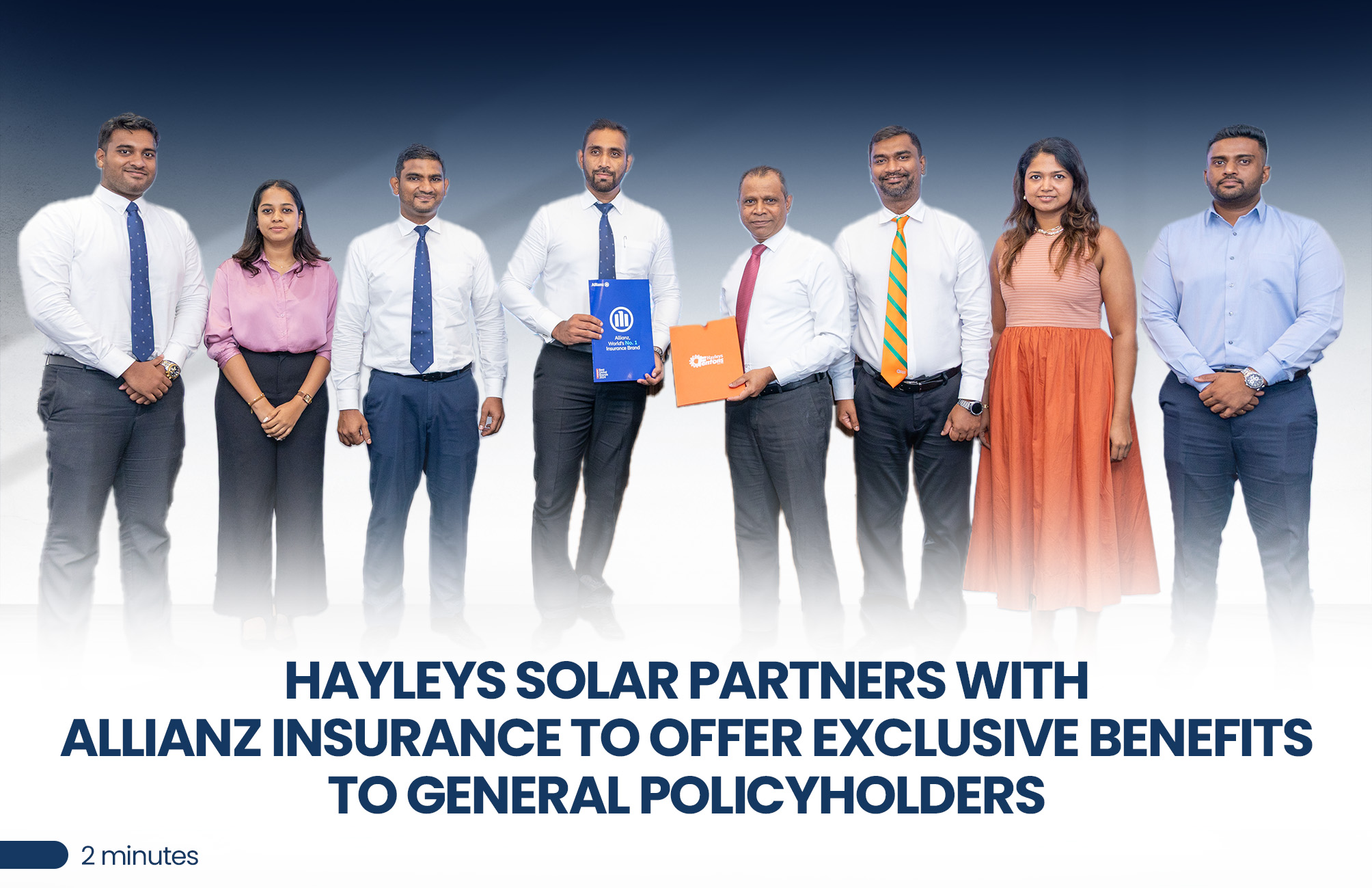
Hayleys Solar, Sri Lanka’s No. 1 solar solutions provider, has partnered with Allianz Insurance Lanka Limited, the world’s No. 01 insurance brand as ranked by Interbrand Best Global Brands, accelerating the accessibility to solar energy, to offer exclusive solar benefits to Allianz General policyholders under the newly launched Allianz Elevate Loyalty Rewards program.

This partnership, sealed by a recently signed Memorandum of Understanding (MoU), offers discounts on solar power systems purchased by Allianz policyholders, along with a free WHC portable solar generator, marking a compelling incentive for households and businesses to transition to renewable energy.

Allianz policyholders purchasing systems ranging from 5kW to 15kW will receive a complimentary 300W WHC Off-grid All-in-One System. Those opting for systems ranging from 20kW to 40kW will be eligible for a 500W unit.

These offers are exclusively applicable to retail policyholders making cash purchases and require presentation of a valid Allianz physical insurance card or verification notification generated via www.allianz.lk  

Speaking on the partnership, Ranga Dias, Chief Distribution Officer of Allianz Insurance Lanka Limited, added: “At Allianz, we believe our responsibility to customers goes beyond simply offering an insurance policy. We are committed to delivering lasting value and meaningful benefits that support their broader life goals. This partnership with Hayleys Solar reflects that vision, empowering our policyholders to make a sustainable investment in their future, while enjoying financial savings today. Through this loyalty program, we are not just protecting what matters, we are helping our customers build a better tomorrow.”

Roshane Perera, Director and Chief Executive Officer of Hayleys Solar, further added: “By joining hands with Allianz Insurance Lanka Limited, we’re accelerating the shift to clean energy and ensuring that sustainability is within reach for more Sri Lankans.”

With Sri Lanka facing urgent energy and climate challenges, partnerships like this offer a blueprint for practical solutions to redefine how nations meet their energy needs.

Net metering is a core reason solar has gained traction in Sri Lanka – but for many, the concept can be confusing. In this article, we’ll break down what net metering is, how it works in Sri Lanka, and how it benefits homeowners and businesses alike.

What is Net Metering?

Net metering allows solar system owners to connect to the national grid (CEB or LECO) and export excess solar energy. The exported energy is deducted from the energy imported from the grid, resulting in a “net” bill.

How Net Metering Works (with a Simple Example):

Let’s say your solar system generates 500 kWh in a month:

  • You consume 400 kWh and export 100 kWh.
  • Your electricity bill is calculated only for the “net” 300 kWh consumed from the grid.
  • Excess credits (if any) can be carried forward up to 10 years.

The 3 Schemes Explained: Net Metering, Net Accounting & Net Plus

Net Metering:

  • Export unused power
  • Credits reduce future bills
  • No payment for surplus energy — just credit roll-over

Net Accounting:

  • You buy and sell electricity separately
  • If you export more than you import, you receive a payment at a predetermined rate

Net Plus:

  • All energy produced is sold to the grid
  • Energy for consumption is purchased separately
  • Suitable for businesses producing energy primarily for sale

Who Can Apply for Net Metering in Sri Lanka?

Eligibility is subject to CEB/LECO approval and technical feasibility.

Residential Homeowners img

Residential Homeowners

Commercial & Industrial Entities img

Commercial & Industrial Entities

Government Institutions img

Government Institutions

Benefits of Net Metering in Sri Lanka

  • Reduced energy bills
  • Lower payback period on solar investment
  • Encourages energy independence
  • Supportive of national energy policy
  • Allows for grid interaction during night or cloudy days

Common Misconceptions about Net Metering:

“I won’t have power at night.”
False. You will always have access to the grid and can import power when needed.

“The process is too complex.”
CEB and LECO have streamlined processes. Plus, Hayleys Solar manages all documentation for you.

“What if I export more than I consume?”
No worries. Under net metering, excess credits carry forward. Under net accounting, you receive payment.

Frequently Asked Questions

Unless your system has battery backup or a hybrid configuration, solar inverters shut down for safety reasons.

Yes, subject to approval and system reconfiguration.

Net metering empowers Sri Lankans to reduce their energy costs while supporting the national grid. Whether you’re looking to save money or embrace a greener lifestyle, understanding your options is key.

Talk to our solar advisors today for a free assessment and net metering guidance.